
Hybrid of Haworthia mirabilis var. badia and Haworthia magnifica var. splendens
hybrids between Haworthia mirabilis (Haw.) Haw. var. badia (Poelln.) M. B. Bayer and Haworthia magnifica Poelln. var. splendens J. D. Venter & S. A. Hammer
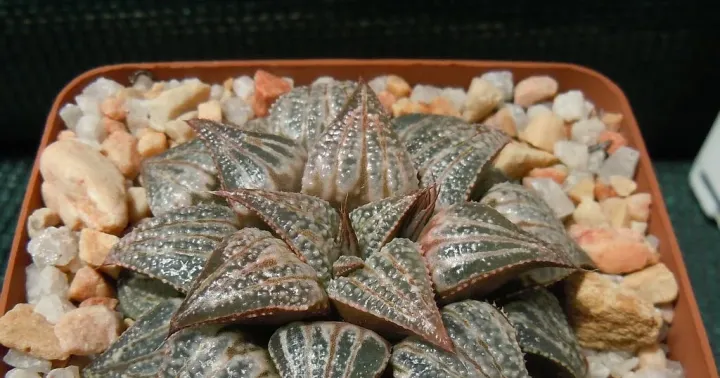
Description
Sowing dates
Propagation of this hybrid in cultivation is most often carried out by seeds or vegetatively via offsets. Sowing is best performed in spring when daylight hours begin to increase, providing seedlings with the necessary natural light for root system development.
Seeds are sown in a sterile, well-draining substrate based on coarse sand and coconut coir. Seed depth should be minimal, as they require light to activate the germination process effectively.
To create an optimal microclimate, the seed tray should be covered with glass or transparent film, maintaining a temperature range of 22–25 degrees Celsius. Regular ventilation is crucial to prevent the development of mold and fungal spores.
Pricking out seedlings is conducted when they reach a diameter of 1–1.5 cm, transferring them into individual small pots. This process requires maximum precision to avoid damaging the delicate roots of the young hybrid.
Young plants require more regular watering than mature specimens, though stagnant moisture at the base must still be avoided. Transition to the adult watering regimen should be gradual as the leaf rosette matures.
Growing requirements
This hybrid belongs to the Asphodelaceae family and is the result of breeding two species native to South Africa. The plant prefers bright, indirect light, as direct sunlight can cause leaf scorch on its characteristic decorative leaf windows.
The soil mix must possess excellent drainage properties. An optimal composition includes loam, leaf mold, coarse sand, and small gravel in equal parts to ensure superior aeration and moisture runoff.
The temperature range during summer should be between 20–28 degrees Celsius. During the winter dormancy period, the plant requires cooler conditions, ideally between 10 and 15 degrees, to support a healthy growth cycle.
Watering must be moderate: the substrate should dry out completely between waterings. Excessive moisture combined with low temperatures quickly leads to rot in the root system and the base of the rosette.
Fertilization is applied only during the active growth phase, using a succulent-specific fertilizer with low nitrogen content. An excess of nitrogen softens the leaves and makes them susceptible to various pests.
Main diseases and pests
The primary threat to this plant is the mealybug, which frequently hides in the leaf axils. Prophylactic measures include regular inspections and the use of systemic insecticides if an infestation is detected.
Root mealybug is a dangerous, hidden pest that can lead to the total collapse of the plant. If its presence is detected, complete substrate replacement and thorough treatment of the root system are required.
Root rot, caused by overwatering, is the most common cause of hybrid failure. It manifests as a loss of leaf turgor and discoloration at the base of the plant, often leading to rapid tissue death.
Spider mites may appear if the indoor air is too dry. They feed on leaf tissues, leaving characteristic light-colored spots that ruin the plant's decorative appearance and lower its natural immunity.
To prevent disease outbreaks, strict quarantine procedures should be followed when introducing new plants into a collection. Regular disinfection of pruning tools is also an essential protective practice.