
Haworthia truncata
Haworthia truncata Schönland
Description
Growing requirements
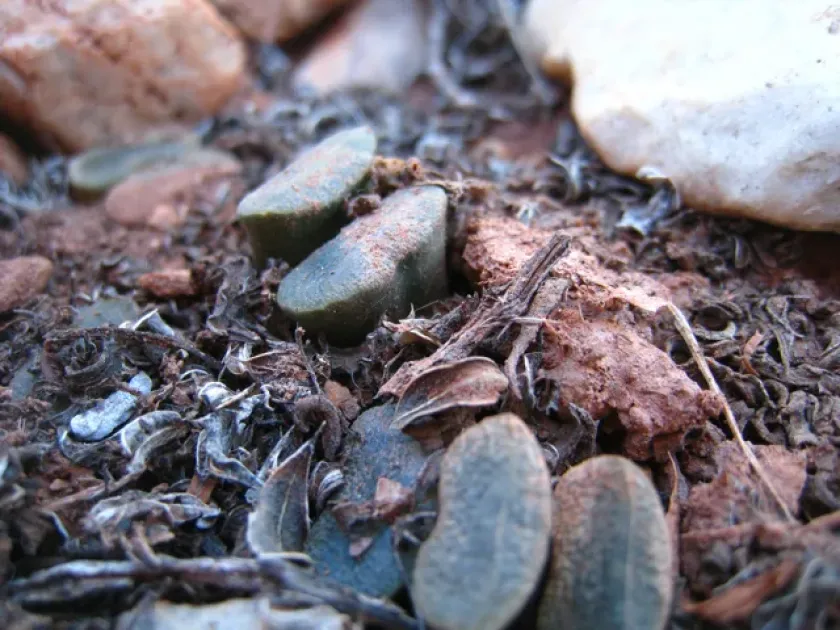
Haworthia truncata, a member of the Asphodelaceae family, is a distinct succulent native to the Little Karoo region of South Africa. It has evolved unique biological adaptations to survive in harsh arid environments with minimal moisture and intense sunlight.
The plant is characterized by its fan-like arrangement of leaves, which appear truncated or cut off at the tips. These flat surfaces serve as transparent windows, allowing light to reach the internal photosynthetic tissues while the rest of the plant remains buried beneath soil.
Cultivation requires a highly porous and well-draining soil mix. A suitable substrate should consist of mineral components like coarse sand, pumice, or perlite. This mimics the natural stony soil of its native habitat and prevents fatal moisture accumulation.
Regarding light, it thrives in bright, filtered sunlight. While it can handle some exposure, direct midday sun is often too harsh, leading to tissue damage. Indoor placement near a south or east-facing window is usually ideal for maintaining the plant's shape.
Temperature management is vital, with an ideal range of 20°C to 25°C during the growing season. In winter, temperatures should drop to approximately 10°C to 12°C to mirror its natural cycle of dormancy, which is necessary for long-term vitality.
Main diseases and pests
The most significant threat is root rot caused by overwatering or poor drainage. To mitigate this risk, allow the soil to dry out completely between waterings and ensure the container has large drainage holes to let excess moisture escape.
Pest issues often involve mealybugs, which tend to nest in the tight crevices between leaves. Regular monitoring and the application of horticultural oils or systemic insecticides are effective ways to protect the plant from infestations.