
Haworthia magnifica var. splendens
Haworthia magnifica var. splendens J. D. Venter & S. A. Hammer
Description
Growing requirements
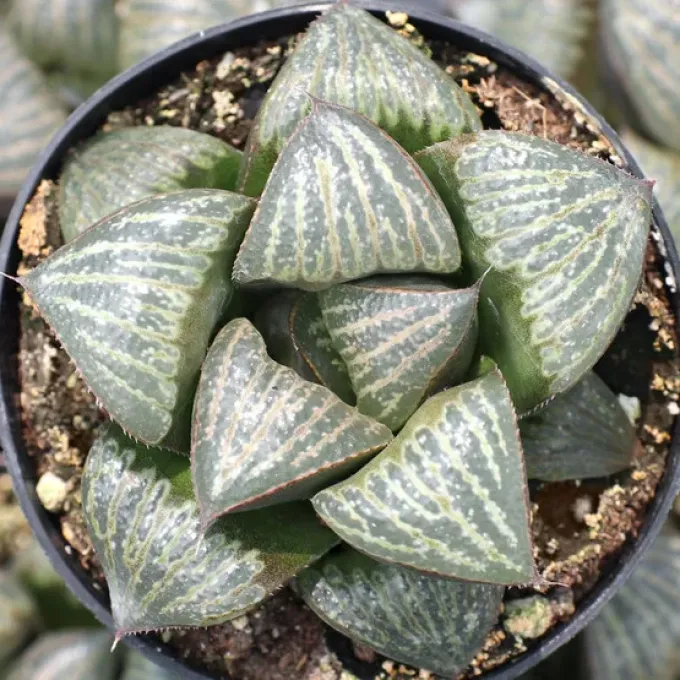
Haworthia magnifica var. splendens is a distinctive succulent member of the Asphodelaceae family, endemic to specific arid areas of South Africa where it thrives in rocky terrain.
To cultivate this species successfully, growers must prioritize light conditions that offer bright, indirect sunlight, as this maintains the distinct texture and aesthetic patterns on the leaf surfaces.
A specialized, highly porous growing medium is critical; standard potting soils are unsuitable, and growers should instead use mixes consisting of volcanic rock, pumice, or expanded clay to promote drainage.
Watering protocols must follow a dry-down cycle, where the substrate is allowed to dehydrate completely between watering intervals to mimic the plant's natural environmental stressors.
Temperature management is vital; while the plant can tolerate moderate heat, it requires a cooling period during the winter months to encourage proper dormancy and healthy metabolic function.
Main diseases and pests
The primary threat to the health of this cultivar is root rot, frequently caused by excess moisture trapped in the soil and poor circulation within the potting vessel.
Mealybugs are the most common insect pest, typically concealing themselves between the tightly packed succulent leaves, making them difficult to detect without a careful inspection.
Spider mites can also become a nuisance, particularly if the cultivation environment is excessively dry and lacks the necessary air movement required for plant health.
Integrated pest management should involve physical removal of pests using isopropyl alcohol and the occasional application of systemic pesticides if infestations persist.
Proactive care, including routine repotting and the use of sterile tools, helps minimize the introduction of pathogens and ensures the longevity of the plant collection.