
Hybrids of Haworthia mirabilis and Haworthia magnifica
hybrids between Haworthia mirabilis (Haw.) Haw. and Haworthia magnifica Poelln.
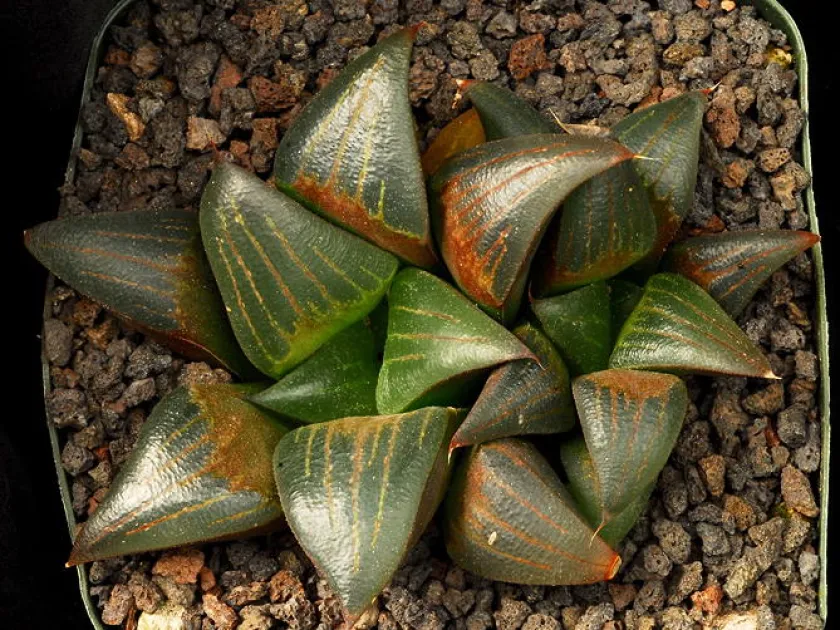
Description
Sowing dates
Propagation of this crop for decorative purposes is most often carried out vegetatively: by dividing the bush or separating daughter rosettes from the mother plant. Seed propagation is practiced less frequently and requires specific skills.
The optimal time for vegetative propagation is spring or early summer, when the plant is in its active growth phase. During this period, rooting occurs faster, and the risk of tissue rot is reduced.
When sowing seeds, use a light, sterile substrate based on sand and peat. Sowing is carried out in the surface layer of the soil, ensuring stable humidity under glass or film at a temperature of about +22...+25°C.
After germination, seedlings need to be gradually acclimated to dry air to avoid acute stress. Transplanting young specimens into individual pots is carried out after the formation of a full-fledged root system.
The use of root-stimulating agents on cuttings allows for an increased survival rate. It is important to ensure the disinfection of cut areas with crushed charcoal to prevent the entry of pathogens.
Growing requirements
These hybrids belong to the Asphodelaceae family and are typical succulents adapted to moderate light conditions. They prefer diffused light, as direct sunlight can cause burns on the succulent leaves.
The soil mixture must have excellent drainage properties. A substrate consisting of sod soil, leaf humus, and coarse sand in a 1:1:2 ratio, with the addition of fine expanded clay, is ideal.
The temperature range in the spring-summer period is +20...+25°C, while in winter the plant enters a dormant state at +10...+15°C. It is important to avoid sharp temperature drops and drafts.
Watering should be moderate: between waterings, the soil clod should dry out completely. In winter, watering is practically stopped, limited only to light moistening to prevent loss of turgor.
Requirements for air humidity are minimal, as Haworthias tolerate dry indoor air well. Spraying the plants is not recommended, as stagnant moisture in the leaf axils leads to the rotting of the rosette.
Main diseases and pests
The main threat to the hybrids is waterlogging of the soil, which leads to the development of root and stem rots. If symptoms are detected, an emergency transplant must be performed, removing damaged root sections.
Among pests, the mealybug and spider mite pose the greatest danger. Mealybugs often hide at the base of the leaves, making early detection difficult.
To combat pests, systemic insecticides of a broad spectrum of action are used. It is important to carry out regular inspections of plants, especially during the transition from winter to spring maintenance.
Fungal infections, such as Fusarium wilt, can affect the plant if agricultural practices are violated. Prevention includes the use of high-quality fungicides and maintaining room ventilation.
If affected by scale insects, mechanical removal of pests is recommended, followed by treatment of the affected areas with an alcohol solution or special preparations. Prophylactic isolation of new plants is mandatory.