
Carex morrowii, Carex oshimensis and Carex trifida hybrids
Hybrids between Carex morrowii, Carex oshimensis and Carex trifida
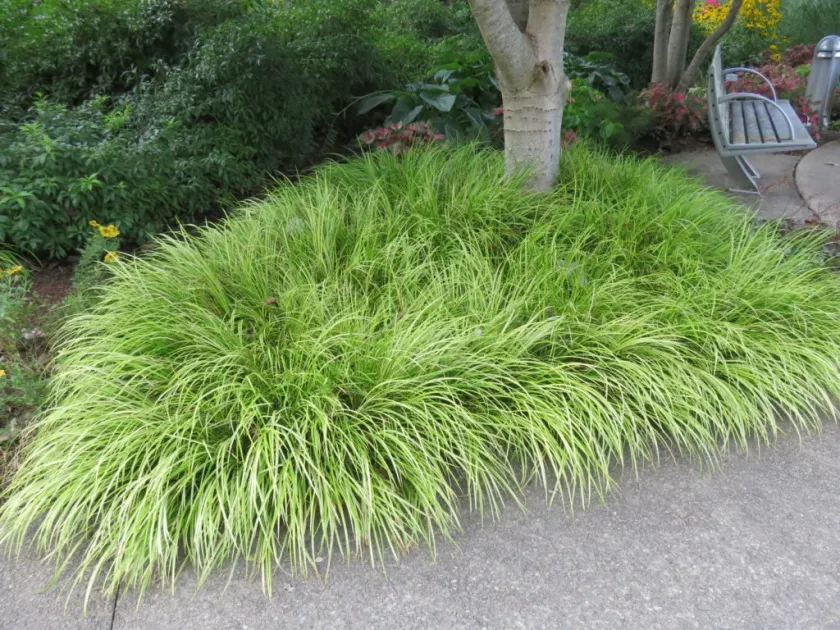
Description
Growing requirements
Hybrids derived from Carex morrowii, Carex oshimensis, and Carex trifida belong to the Cyperaceae family. These perennial herbaceous plants are valued for their high ornamental appeal and dense clumping habit that forms neat mounds.
These forms prefer semi-shaded areas with moderately moist, well-drained soils. Intense direct sunlight may cause foliage scorch, so filtered or partial light is considered optimal for healthy growth.
The plants require consistent moisture, particularly during the growing season; however, they strictly do not tolerate standing water around the root zone, which can lead to root rot.
The soil substrate should be rich in organic matter with a neutral to slightly acidic pH level. To improve the structure of heavy soils, it is recommended to incorporate peat or leaf compost during planting.
Cold hardiness varies depending on the specific cultivar, but most of these hybrids successfully overwinter in temperate climates, especially with light snow cover or organic mulching.
Yield
The agricultural use of this crop is not for commodity production but for landscape design purposes. These plants are indispensable as ground covers, border plants, or components for container gardening.
In nurseries, the production of high-quality planting material is ensured through intensive vegetative propagation—division of the rootstock, which is the most effective method for maintaining cultivar traits.
The ornamental effect is achieved through the density of the shoots: under optimal conditions, a single mature clump can maintain its visual appeal for 5–7 years without losing its shape.
The rate of vegetative growth depends on the nutrient regimen; applying complex mineral fertilizers in early spring helps the mounds become denser and more vibrant in color.
These plants demonstrate high regenerative capacity following seasonal pruning, which allows them to be used effectively in intricate architectural garden designs.
Main diseases and pests
The primary diseases affecting these hybrids are fungal infections, which often occur due to poor agronomic practices, specifically over-watering and inadequate air circulation around the base of the plant.
In spring, rust may appear on the leaf blades, necessitating treatment with systemic copper-based fungicides or specific broad-spectrum fungicides to prevent spread.
Pests such as spider mites may infest the plants during hot and dry summer conditions, causing foliage discoloration and loss of turgor in the leaves.
To control pest populations, insecticides and acaricides are utilized, though the most effective method remains prevention through regular weeding and maintaining cleanliness in the root zone.
Slugs and snails can damage young shoots in the spring, so it is advisable to use mulching materials that prevent excessive moisture accumulation near the soil surface.