
Huperzia suberecta
Huperzia suberecta
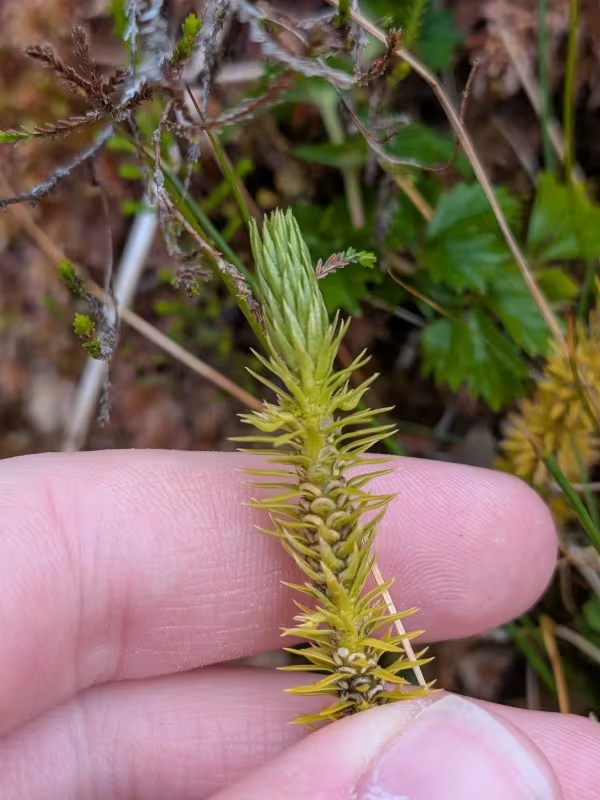
Description
Growing requirements
Huperzia suberecta is a perennial spore-bearing plant belonging to the Huperziaceae family. It is recognized for its unique upright growth habit and dense, dichotomously branching stems, which form compact clusters in high-humidity, cool environments.
The plant strictly requires acidic, humus-rich soil to thrive. In a cultivation setting, mimicking the natural forest floor environment is essential, ensuring a low-light intensity environment to prevent photosynthetic stress and tissue dehydration. Direct sunlight is highly detrimental to this species.
Water management is the most critical aspect of agrotechnology for Huperzia suberecta. The plant needs constant, moderate soil moisture combined with high atmospheric humidity. Irrigation systems must ensure that water reaches the rhizoids without causing stagnant conditions that encourage rot.
Its primary agricultural value lies in the production of specific alkaloids. These chemical compounds are of significant interest to the pharmaceutical sector for the development of neuroprotective medications, necessitating specialized extraction and harvesting practices.
Due to its slow growth rate, Huperzia suberecta requires a long-term strategy for biomass production. It is not a typical crop for rapid harvest cycles, as it demands years to establish a sustainable, harvestable volume while maintaining its essential mycorrhizal associations.
Main diseases and pests
The main biological threats include soil-borne fungal pathogens which quickly infiltrate the rhizoid system under conditions of poor aeration or excessive standing water. These infections are difficult to eradicate once they take hold in the root-zone substrate.
Pests such as specialized nematodes pose a significant risk to the plant's ability to maintain nutrient uptake. Regular inspection of the root zone is required to detect early signs of infestation, as the plant possesses very little resilience to root damage.
Environmental stress, particularly temperature spikes, can lead to severe physiological decline. Because Huperzia suberecta is adapted to stable forest climates, even minor fluctuations in heat can cause rapid wilting and reduction in the synthesis of desirable alkaloids.
Chemical contamination, especially from standard synthetic fertilizers, is a major threat. The plant lacks the physiological mechanisms to process high mineral concentrations, meaning that standard agricultural nutrients are often toxic to its delicate biological system.
The long-term health of the crop depends on maintaining a sterile, balanced microflora in the growth medium. Loss of the symbiotic fungal partners results in total plant failure, making biodiversity in the soil a prerequisite for successful cultivation.