
Arctic fir clubmoss
Huperzia arctica
Description
Growing requirements
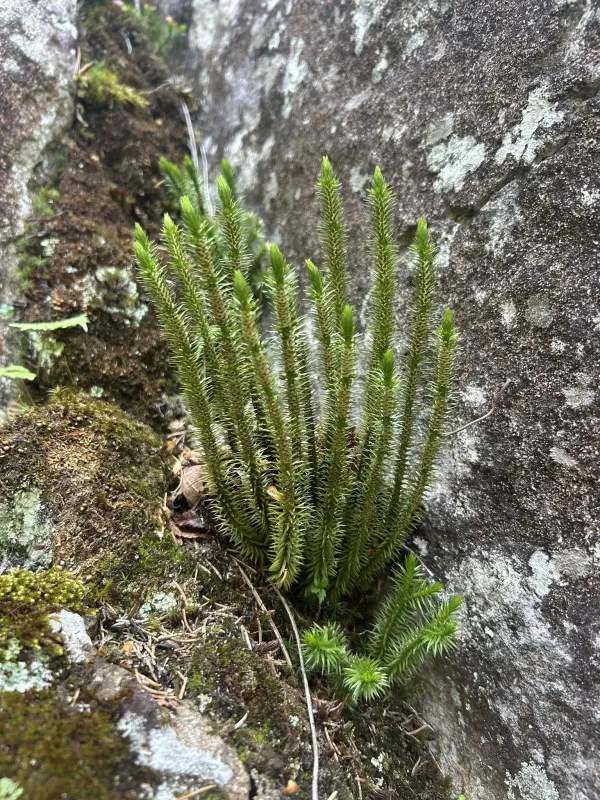
Arctic fir clubmoss (Huperzia arctica) is a perennial vascular cryptogam belonging to the family Huperziaceae. It is a slow-growing, evergreen plant primarily found in the cold, harsh environments of the circumpolar Arctic region, where it plays a role in the local moss-lichen tundra ecosystem.
The plant originates from the northernmost parts of the globe, specifically across the Arctic regions of Canada, Greenland, and Eurasia. It typically colonizes rocky substrates, scree slopes, and dry tundra heaths where competition from vascular plants is significantly restricted by extreme temperatures.
Botanically, it is characterized by its dichotomously branched stems that form dense, low-growing mats. The leaves are small, narrow, and persistent throughout the winter, which is an adaptation to the brief growing season. The root system is shallow, reflecting its adaptation to thin soils and permafrost conditions.
Regarding environmental requirements, the plant thrives in acidic, well-drained soils with a constant supply of atmospheric moisture. It is highly intolerant of physical soil disturbance and relies on stable, undisturbed substrates to maintain its population density, which is often low due to the slow maturation of gametophytes.
Hostile climatic conditions dictate that human utilization of this species remains minimal and largely restricted to scientific research. Due to its slow reproduction rate and ecological sensitivity, Huperzia arctica is not a crop in the agricultural sense, but it remains a subject of interest for phytochemical studies due to its unique alkaloid content.
Main diseases and pests
The main threats to Huperzia arctica include climate change, which threatens to destabilize permafrost landscapes and facilitate the expansion of competing species. Furthermore, industrial activities in the Arctic and excessive trampling by large herbivores can cause irreversible damage to the fragile mats of this species.