
Huperzia phlegmaria
Huperzia phlegmaria
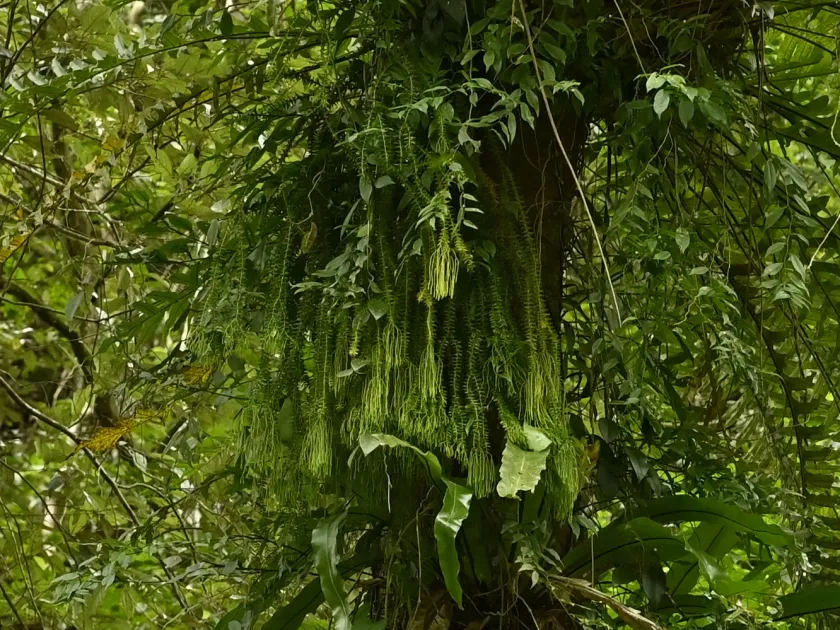
Description
Growing requirements
Huperzia phlegmaria, commonly known as the tassel fern, is a striking epiphytic species belonging to the Huperziaceae family. Naturally occurring in the tropical rainforests of Asia, Africa, and Australia, it grows primarily on tree trunks and mossy rocks.
This plant thrives in high humidity conditions, ideally maintained above 60% to replicate its natural forest habitat. A stable ambient temperature ranging from 20°C to 25°C is essential for the plant to maintain vigorous growth throughout the year.
As an epiphyte, the plant requires a highly porous and aerated growing medium. A blend of chopped sphagnum moss, orchid bark, perlite, and a small amount of charcoal is highly recommended to ensure proper drainage while holding sufficient moisture.
Bright, indirect light is necessary for healthy development. While it requires a significant amount of light to support its long, drooping stems, direct sunlight must be strictly avoided to prevent foliage scorch and dehydration.
Consistency in watering is vital. The root system should be kept evenly moist but never waterlogged. Using rainwater or distilled water is preferred, as this species is sensitive to mineral buildup caused by hard tap water which can damage the delicate roots.
Main diseases and pests
Fungal pathogens represent the most significant threat to Huperzia phlegmaria, often triggered by overwatering or poor air circulation within the plant canopy. Once infection sets in, it can quickly cause decay in the stems and base.
Mealybugs are common pests that tend to hide in the dense axils of the plant. Because of the complex structure of the stems, these insects can be difficult to eradicate; regular inspection and manual removal are necessary during early stages of infestation.
Spider mites can become a major issue, especially in environments with low humidity. They typically manifest as fine webbing on the undersides of the leaves, causing the foliage to lose its vibrant green color and eventually drop.
Root rot, caused by stagnant water or a compacted substrate, is a primary cause of plant failure. Once the roots are compromised, the upper growth begins to wither rapidly, necessitating an urgent repotting into fresh, airy medium.
Improper fertilization can lead to salt accumulation in the substrate, which manifests as tip burn. It is critical to use highly diluted fertilizers, specifically formulated for epiphytic plants, to ensure the plant receives nutrients without chemical shock.