
Shining firmoss
Huperzia lucidula
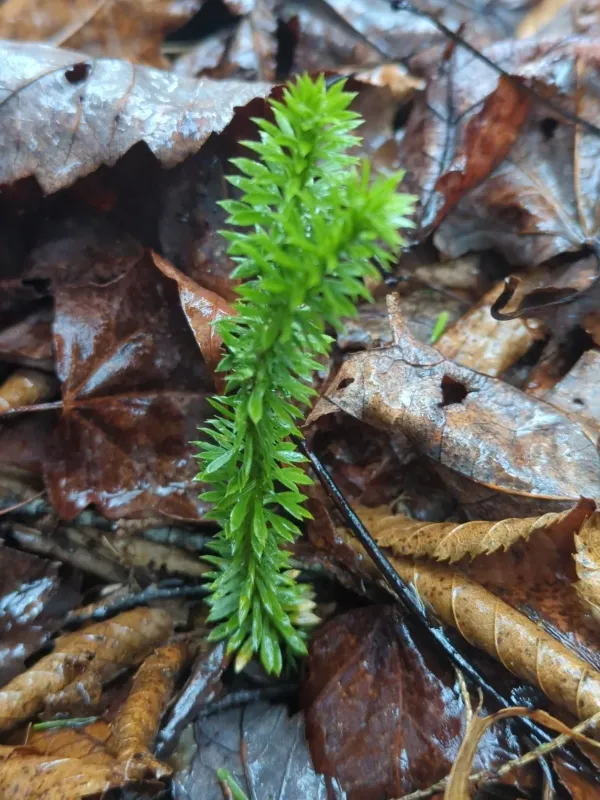
Description
Growing requirements
Shining firmoss, scientifically classified as Huperzia lucidula, belongs to the family Lycopodiaceae. It is a perennial pteridophyte native to the damp, shaded forests of North America, where it forms dense, creeping colonies.
The plant is characterized by its dichotomously branching stems covered in glossy, lanceolate leaves. These leaves have a distinct shine, which serves as an adaptation to maximize light absorption in low-light environments.
Optimal growth requires a cool, humid environment with consistently moist, acidic soil. The species is highly sensitive to desiccation and direct sunlight, making it difficult to maintain outside of its natural woodland understory habitat.
Cultivation practices focus heavily on mimicking forest floor conditions. Growers typically use organic-rich substrates, such as peat-based mixtures, ensuring excellent aeration and drainage to prevent root rot while maintaining hydration.
Propagation is primarily vegetative through specialized gemmae produced in the leaf axils. Sexual reproduction via spores is a complex biological process requiring specific symbiotic fungi, making large-scale commercial production challenging.