
Fir clubmoss
Huperzia selago
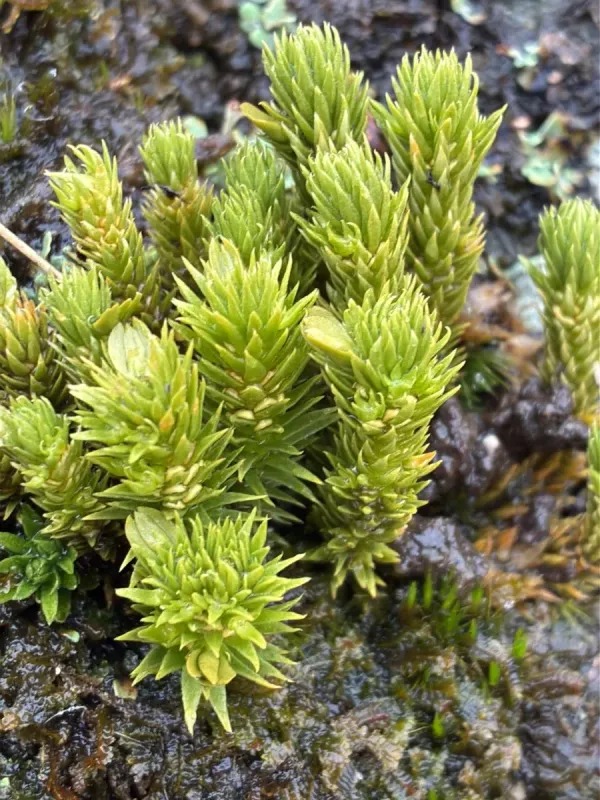
Description
Growing requirements
Fir clubmoss (Huperzia selago) is a perennial spore-bearing plant belonging to the Lycopodiaceae family. It is a circumpolar species primarily found in damp forests, rocky outcrops, and subalpine tundra zones.
The plant requires specific soil conditions, thriving in acidic, humus-rich, and well-drained soils that mimic natural forest floor or boggy environments.
Humidity is the most critical factor for the survival of the species; it demands high atmospheric moisture levels and consistently damp substrate to maintain the physiological processes of the stems.
It prefers shaded or semi-shaded areas, as direct exposure to intensive sunlight can lead to rapid dehydration and thermal stress, which the plant cannot survive under natural conditions.
Commercial cultivation remains a significant challenge due to the species' extremely slow growth rate and complex requirements for symbiosis with soil fungi, which are essential for spore germination.
Yield
The economic value of Fir clubmoss is primarily linked to its medicinal properties, specifically the presence of the alkaloid huperzine (selagine), which has historical and contemporary pharmacological applications.
Medicinal use focuses on treating chronic alcoholism, though the plant must be used with extreme caution due to its high toxicity to humans and potential side effects on the nervous system.
There is no widespread agricultural harvesting of this plant because it is protected in many jurisdictions, making wild-harvesting strictly regulated or prohibited to ensure biodiversity conservation.
For horticultural purposes, it is rarely grown except in specialized botanical research centers that can replicate the cold, humid, and shaded mountain climates needed for its long-term viability.
Current research directions focus on biotechnology, aiming to synthesize secondary metabolites in controlled laboratory conditions rather than relying on the extraction from wild populations.
Main diseases and pests
Climate change poses a major threat to Fir clubmoss, as the warming of its natural tundra and high-latitude habitats disrupts its life cycle and reduces the available moisture required for reproduction.
The species is highly susceptible to environmental pollution; atmospheric sulfur and nitrogen deposits negatively affect the soil acidity, causing rapid decline in health of local populations.
During experimental propagation, the plant is prone to root rot caused by pathogenic fungi if the irrigation system is not strictly managed to prevent waterlogging and poor oxygen circulation.
While the plant's natural toxicity acts as a deterrent to most herbivores, disturbances in the local food web can lead to increased grazing pressure on young, less protected stems.
The lack of competitive ability means that Fir clubmoss can easily be outcompeted by invasive weeds or aggressive native vegetation in areas where natural ecological balance has been disrupted by humans.