
Huperzia goebelii
Huperzia goebelii
Description
Growing requirements
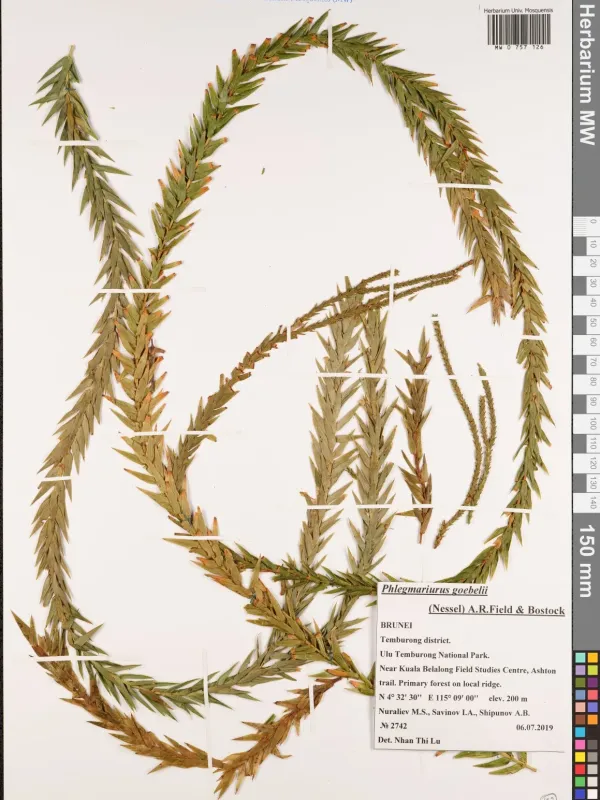
Huperzia goebelii is a perennial spore-bearing plant belonging to the Huperziaceae family. This species is known for its distinct, dichotomously branched stems covered with narrow leaves, which give it a unique and highly ornamental appearance in controlled environments.
The plant originates from tropical ecosystems, where it typically grows as an epiphyte on trees or rocky surfaces. Because of this specialized biological niche, its cultivation requires simulating high-humidity environments with stable, diffused lighting conditions.
When cultivating this species, it is essential to use a loose, well-draining substrate rich in organic matter. A mixture of long-fibered sphagnum moss, bark, and perlite is generally recommended to maintain moisture while preventing the roots from suffocating in stagnant water.
Temperature control is a critical aspect of the plant's management. It prefers consistent temperatures between 18°C and 24°C. Exposure to extreme heat or cold drafts can cause severe physiological stress, often leading to slow growth or the death of the delicate branches.
Water quality is equally important for the healthy development of Huperzia goebelii. The use of soft, demineralized, or rainwater is strongly recommended, as the plant is highly sensitive to the mineral buildup often found in hard tap water, which can damage its tissues.
Main diseases and pests
The primary threats to the health of this species are fungal pathogens caused by improper watering practices. Over-watering creates an anaerobic environment in the root zone, leading to rapid root rot that is difficult to reverse once symptoms appear on the foliage.
Pests such as spider mites, mealybugs, and scale insects are common in greenhouse environments. Because of the plant's dense foliage structure, early detection is difficult, making preventative maintenance and periodic inspections essential for successful management.
Low humidity levels represent a significant environmental threat, often resulting in the browning and desiccation of the tips of the shoots. If environmental humidity drops below recommended levels, the plant loses its vitality and becomes more susceptible to secondary infections.
Mechanical damage from handling is another common issue. The stems are fragile and prone to breakage, which makes repotting and vegetative propagation operations high-risk tasks requiring careful handling by skilled horticulturists.
Poor ventilation can lead to the proliferation of mildew and other surface molds. It is crucial to maintain gentle air circulation around the plants to ensure a healthy microclimate that inhibits the growth of unwanted microorganisms while supporting transpiration.