
Siebold's Hosta
Hosta sieboldii
Description
Growing requirements
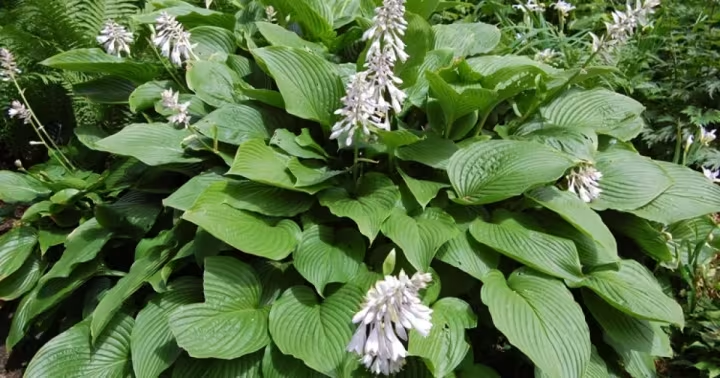
Siebold's Hosta (Hosta sieboldii) is a perennial herbaceous plant belonging to the Asparagaceae family. Native to Japan, this plant has naturally adapted to the understory of temperate forests, thriving in moist and shaded environments.
The plant performs best in locations with partial to full shade. While some varieties can tolerate more light, Siebold's Hosta requires protection from intense midday sun to prevent leaf scorch and to maintain its distinct coloration and leaf texture.
Optimal growth is achieved in fertile, well-draining, and humus-rich soils. The plant prefers consistent moisture levels but is highly sensitive to waterlogging, which can cause root rot, especially during the dormant winter period.
Climate requirements for this species are quite flexible as it is known for its high cold hardiness. It adapts well to various temperate regions and does not require special winter protection, making it a low-maintenance choice for perennial beds.
In landscape design, this hosta is used for ground cover, bordering, and filling shaded garden areas. Its primary value lies in its foliage, which provides texture and form throughout the growing season, effectively suppressing weed growth under its canopy.
Main diseases and pests
Slugs and snails are the primary pests that pose a significant threat to Hosta sieboldii. These mollusks feed on the lush foliage, leaving behind unsightly holes and often causing substantial damage to the plant's overall health.
Viral diseases, most notably Hosta Virus X (HVX), are a serious concern. Symptoms include mottled patterns and stunted growth. Because there is no cure for viral infections, infected plants must be removed to prevent spreading to healthy specimens.
Fungal infections, such as Phyllosticta leaf spot or crown rot, can occur in environments with poor air circulation or excessive moisture. Maintaining proper spacing between plants is crucial to ensure adequate airflow and reduce fungal risks.
Nematodes are another potential threat that can cause brown streaks between leaf veins. If an infestation is confirmed, contaminated soil and plant matter should be handled with extreme care to stop the spread of these microscopic pests.
Effective pest management relies on early detection and regular monitoring. Utilizing physical barriers against slugs or applying targeted eco-friendly treatments can significantly protect the foliage during the vulnerable spring months.