
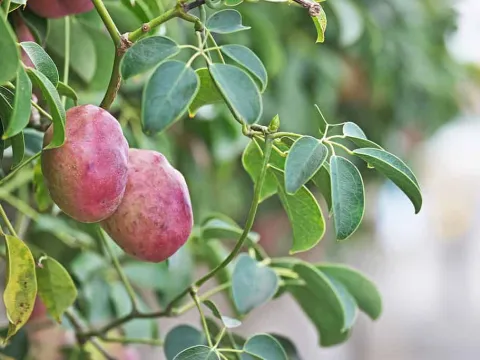
Holboellia
Holboellia Wall.
Propagation of Holboellia for agricultural or horticultural purposes is primarily done through seeds or cuttings. Seeds should be sown immediately after collection, as they lose viability quickly when dried.
What the section contains

Holboellia
For vegetative propagation, semi-hardwood cuttings are taken during the summer months. They are placed in a light, moist substrate to facilitate successful root development.
Stratification is a critical step for seeds, as it helps break dormancy and significantly improves germination rates in controlled climate settings.
Young seedlings require careful handling during transplantation, as the root system of this vine is particularly sensitive to mechanical stress in the early stages.
The optimal time for planting out is in the spring, once the threat of frost has passed, allowing the plant to establish itself before the arrival of winter.
Holboellia belongs to the Lardizabalaceae family and is a vigorous evergreen climber native to the mountainous regions of East Asia, including China and the Himalayas.
The plant thrives in sheltered locations protected from strong winds, preferring full sun or light shade, which is essential for healthy flower production.
Holboellia is not overly demanding regarding soil type; however, it performs best in fertile, moisture-retentive, yet well-drained loamy soils with a slightly acidic pH.
Regular but moderate irrigation is required, especially during dry spells, as waterlogging can lead to severe root rot and plant decline.
A sturdy support structure is necessary for proper growth, as the stems can reach significant lengths, utilizing tendrils or simply twining around vertical supports.
The agricultural use of Holboellia focuses on its edible fruit, which resembles a cucumber in shape, while the pulp offers a delicate, sweet flavor reminiscent of bananas.
To ensure a consistent yield, cross-pollination is often necessary; therefore, planting multiple specimens in the same area is highly recommended for growers.
Fruits develop following a fragrant flowering period that attracts various pollinators with its sweet scent, often described as a mix of vanilla and chocolate.
On a commercial scale, harvesting requires delicate handling, as the skin of mature fruit softens and is highly susceptible to damage during transit.
Yield capacity is heavily influenced by regional climatic conditions and the availability of essential nutrients during the fruit-set and development phases.
Holboellia generally exhibits high resistance to most common garden diseases; however, improper agricultural practices can lead to fungal infections.
In greenhouse environments or areas with high humidity, the vine may be susceptible to powdery mildew, requiring preventive fungicide applications.
Pest management should focus on sap-sucking insects like aphids and spider mites, which can become problematic during prolonged periods of heat and dryness.
Root rot is the most significant threat, occurring primarily when there is poor drainage or excessive water accumulation around the root crown.
Maintaining plant health involves routine sanitary pruning to remove dead or damaged branches, which promotes better air circulation and reduces disease pressure.
Harvesting Holboellia fruit is performed based on maturity indicators, specifically when the skin develops a rich purple or deep pink hue, depending on the variety.
The distinct fragrance of the mature fruit serves as the primary indicator for farmers to begin the harvest process.
Hand-harvesting is preferred, using shears to clip the fruit stalks carefully to avoid damaging the main vines that will produce fruit in the following season.
Post-harvest storage should take place in a cool, humid environment, as the fruits have a relatively short shelf life and are best consumed or processed quickly.
With precise agronomic management, the harvest window can be extended over several weeks, providing a consistent supply for fresh markets or culinary processing.