
Scorpion senna
Hippocrepis emerus
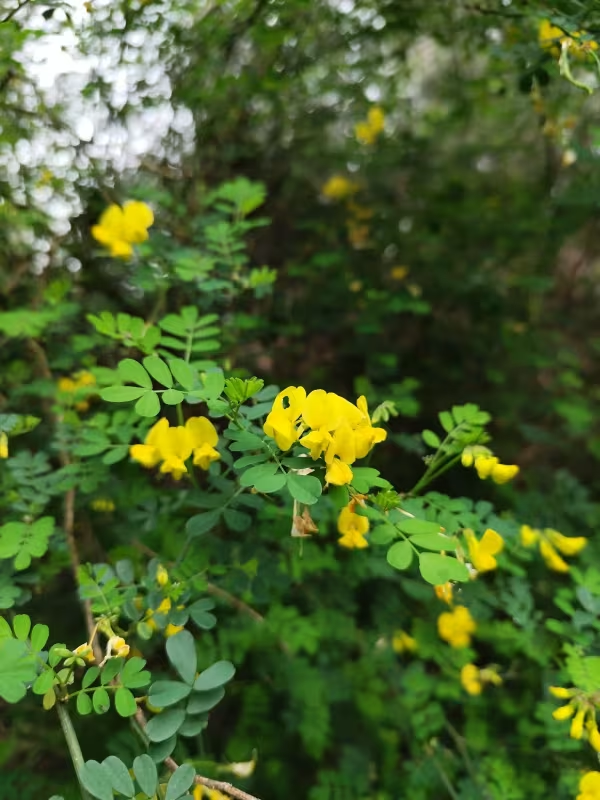
Description
Sowing dates
Scorpion senna, scientifically known as Hippocrepis emerus, is a perennial legume shrub. For successful cultivation, sowing is typically performed in the spring once the soil temperature consistently reaches 10-12 degrees Celsius.
Due to the hard seed coat, seeds often require scarification or stratification to improve germination rates. Seeds should be planted at a depth of 1.5–2 centimeters in light, well-draining soil to ensure optimal moisture contact.
Sowing methods include drilling or wide-row planting, depending on the intended use—whether for forage production or landscaping. Maintaining a spacing of 40–50 centimeters between plants allows for optimal structural development.
Seedlings develop slowly during the early stages, making weed control essential. Frequent cultivation or weeding during the first month is necessary to ensure the plants establish a strong, deep root system.
When grown as a forage crop, the seeding rate is usually between 10 and 15 kilograms per hectare, depending on the purity and germination potential of the seed batch.
Growing requirements
As a Mediterranean native, this species thrives in sunny, well-lit environments. Exposure to direct sunlight is crucial for biomass production; shade tends to produce spindly, less resilient growth.
The plant is undemanding regarding soil fertility, preferring calcareous, well-draining substrates. It is particularly well-adapted to rocky slopes and nutrient-poor soils where other legumes might struggle.
The optimal pH range for Scorpion senna is between 6.5 and 8.0. In acidic soil conditions, liming is recommended to stimulate the activity of nitrogen-fixing bacteria, which are vital for the plant's natural fertilizer production.
The plant possesses remarkable drought tolerance due to its deep taproot system, which accesses water from deeper soil profiles. This makes it an ideal candidate for cultivation in arid or semi-arid regions.
While the species is hardy in typical temperate climates, it appreciates protection from harsh winds and extreme winter temperatures in regions where the ground freezes deeply.
Yield
Scorpion senna serves as an excellent soil improver. Through its symbiotic relationship with rhizobia bacteria, it fixes atmospheric nitrogen, significantly enriching the soil profile for successive crops.
In forage systems, the plant provides moderate nutritional value for grazing animals like sheep and goats. However, it should be managed as part of a diverse pasture mix to prevent the over-ingestion of natural secondary metabolites.
The species is highly valued by beekeepers as a reliable honey plant. Its extended flowering period, spanning from late spring to mid-summer, ensures a steady supply of nectar for local bee populations.
For land reclamation, Hippocrepis emerus is effective at preventing soil erosion. Its root system is exceptionally efficient at stabilizing slopes, embankments, and degraded landscapes prone to wind or water runoff.
In favorable conditions, the plant is capable of providing several cuts of green biomass per season. Its ability to regrow rapidly after mowing makes it a sustainable option for recurring forage production.
Main diseases and pests
This species is generally robust against diseases; however, waterlogged soil can lead to root rot. Good drainage is the most effective preventative measure against fungal complications.
Powdery mildew is occasionally observed in high-humidity conditions. Maintaining proper plant spacing and air circulation within the field significantly reduces the risk of leaf pathogen outbreaks.
Insect pests, particularly weevils, can cause damage to the reproductive organs, which is a major concern when the crop is being cultivated specifically for seed production.
Aphid infestations may occur on young shoots during the growing season. Early detection and the use of biological control agents are recommended to maintain plant vigor without disrupting the local ecosystem.
Adhering to strict crop rotation practices and monitoring fields regularly allows growers to keep pest populations below the economic injury level, ensuring the longevity of the stand.
Harvesting
Harvesting seeds requires careful timing, as the pods are prone to dehiscing (splitting) when fully mature. Harvesting should commence when the pods turn a deep brown color to prevent seed loss.
For forage, mowing should occur during the peak flowering phase, which is when the nutrient content, particularly proteins and vitamins, is at its highest concentration.
Once mowed, the biomass must be dried rapidly to prevent spoilage. Proper ventilation or mechanical drying techniques are essential to maintaining the nutritional quality of the hay.
For winter survival, the final harvest should be completed at least a month before the first predicted frost. This allows the plants to store enough carbohydrate reserves in their roots to survive the dormant period.
Stored products should be kept in cool, dry, and well-ventilated areas to ensure long-term stability and to prevent the development of mold or mycotoxins.