
Hippocrepis ciliata
Hippocrepis ciliata
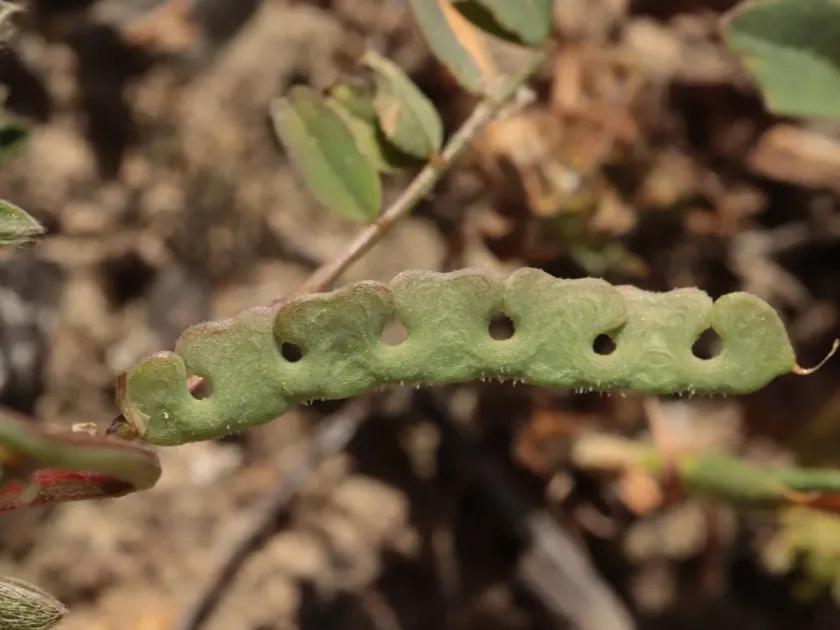
Description
Sowing dates
Hippocrepis ciliata is a member of the Fabaceae family, recognized for its durability and adaptation to arid environments. It is increasingly valued as a forage crop in specific climates.
Sowing should take place in early spring when the soil temperature consistently reaches 10 degrees Celsius. This allows the plants to establish before the onset of extreme summer heat.
The seeds are typically sown in drills at a shallow depth of 2 to 3 centimeters. Proper seedbed preparation is vital to ensure optimal moisture retention for germination.
Uniform distribution of seeds is essential for avoiding competition for nutrients and space. Farmers usually aim for moderate plant density to facilitate vigorous growth.
Rolling the soil after sowing helps improve seed-to-soil contact, which is particularly beneficial in dry conditions to accelerate the emergence of seedlings.
Growing requirements
The crop thrives in well-drained, light-textured soils. It is notably tolerant of calcareous and rocky terrains where other legumes might struggle to develop adequately.
Drought tolerance is a primary characteristic of this species. It has evolved to perform efficiently in regions where precipitation is sporadic and unreliable.
Exposure to full sunlight is critical for maximizing productivity. The plant shows poor vigor when shaded by taller crops or weeds, emphasizing the need for proper site selection.
Soil pH should ideally be neutral or slightly alkaline. Acidic soils are generally unsuitable and require amendments like lime to ensure the symbiotic nitrogen fixation process works.
While the plant is effective at gathering nitrogen from the atmosphere, applying small amounts of phosphorus can significantly enhance root development and yield in poor soils.
Main diseases and pests
Root rot is the most common disease associated with this crop, particularly in poorly drained fields. Excessive soil moisture is the primary catalyst for these fungal infections.
Powdery mildew can affect the foliage during periods of high humidity. It manifests as a white, powdery coating on the leaves and can reduce overall forage quality.
Weevil larvae often target the root nodules, which can inadvertently lower the plant's nitrogen-fixing capacity and weaken the overall crop health.
Aphid infestations are occasionally seen during warm, dry weather. They cluster on tender shoots and stems, potentially transmitting viruses and causing stunted growth.
Effective weed management, especially in the early stages, is crucial. The plant is relatively slow to establish and can be easily overwhelmed by faster-growing competitive weeds.