
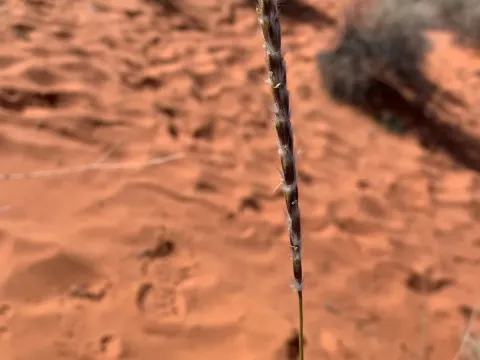
Hilaria
Hilaria
Hilaria species are primarily perennial grasses managed through natural regeneration or rangeland restoration techniques rather than conventional annual cropping.
What the section contains


Hilaria
When seeding is required, it is essential to prepare a firm seedbed, as Hilaria seeds are small and have limited energy reserves for deep emergence.
Sowing should ideally coincide with the onset of the rainy season to provide sufficient moisture for germination and initial root establishment.
Light incorporation of seeds into the soil surface followed by rolling is recommended to ensure optimal seed-to-soil contact in dry environments.
For large-scale restoration, drill seeding into existing vegetation or range land is often preferred to protect seedlings from heat and erosion.
Hilaria is highly adapted to arid and semi-arid climates, thriving in regions where moisture availability is the limiting factor for plant growth.
The plants are remarkably tolerant of diverse soil types, including sandy, rocky, and alkaline soils, demonstrating great resilience in nutrient-poor conditions.
High levels of solar radiation are necessary for the plant's development, and it exhibits superior heat tolerance compared to traditional agricultural grasses.
Minimal moisture is required for survival; the species is known to enter a dormant state during extreme drought to protect its root system.
Adequate space is critical, as Hilaria does not compete well with dense, fast-growing invasive weeds during its slow initial establishment phase.
The forage yield of Hilaria is moderate but consistent, making it a critical resource for livestock in areas where other grasses cannot survive.
It maintains significant nutritional value even when mature and dry, acting as an important standing hay source for winter grazing.
Total biomass production is largely dependent on the frequency of rainfall events, with Hilaria responding rapidly to even minor moisture pulses.
Proper grazing management is the key to maintaining yield, as continuous overgrazing significantly reduces the vigor and regrowth potential of the stand.
When managed as a pasture resource, Hilaria contributes to soil stability, effectively preventing erosion in fragile, arid landscapes.
Hilaria possesses strong natural resistance to most common diseases affecting conventional forage grasses, largely due to its evolutionary adaptation to harsh habitats.
The primary threat to Hilaria populations is overgrazing, which depletes root reserves and leads to stand thinning and long-term ecosystem degradation.
Insects such as grasshoppers can cause severe localized damage to foliage during years of population outbreaks, impacting available forage volume.
Competition from exotic invasive weeds can severely threaten native Hilaria stands by consuming available water resources before the grass can recover.
Effective management strategies include rotational grazing cycles to allow plants to replenish carbohydrates in their rhizomes between grazing periods.
Harvesting Hilaria for hay is uncommon compared to the primary use of the plant as standing forage in grazing systems.
If hay production is necessary, the optimal harvest timing is during the early boot to flowering stage to ensure the highest protein content.
Machinery operations can be difficult due to the rugged terrain and rocky soil conditions where these grasses naturally occur.
Rapid curing of the cut material is required to prevent the degradation of quality and the loss of vitamins caused by excessive sun exposure.
When harvesting for seed, practitioners must be aware of uneven maturation, often requiring selective gathering methods to ensure quality seed collection.