
Big galleta
Hilaria rigida
Description
Growing requirements
Big galleta (Hilaria rigida) is a perennial grass species belonging to the Poaceae family, widely distributed across the desert regions of the southwestern United States and Mexico. It is specifically adapted to extreme arid climates and high solar exposure.
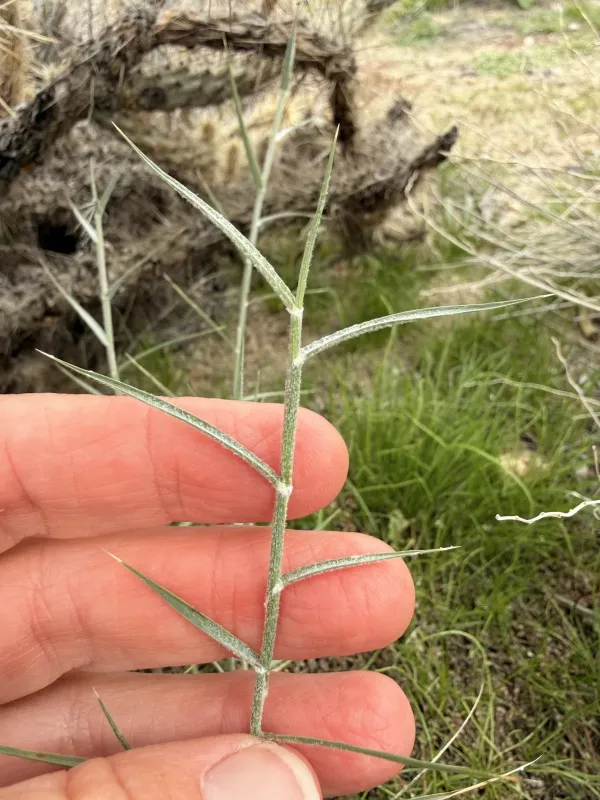
The plant features rigid, stiff stems forming dense clumps, which serve as a mechanism to minimize water loss. Its structure allows it to thrive in sandy soils and rocky plains where moisture levels are often too low for other common forage species.
Environmental requirements for Big galleta are centered around its need for excellent drainage. It performs best in nutrient-poor but well-aerated substrates, demonstrating significant tolerance to saline soil conditions, which is common in desert basins.
In terms of agricultural utility, this grass is primarily valued for its soil-binding capabilities. Its deep, fibrous root system makes it an essential tool for stabilizing sand dunes and preventing wind-induced soil erosion in vulnerable dryland ecosystems.
While not a primary forage crop due to its coarse texture, it provides valuable cover for desert wildlife. In the absence of other vegetation, it serves as a maintenance forage source for livestock grazing in extensive arid ranges.
Main diseases and pests
Hilaria rigida is inherently resilient to most common crop diseases, as the desert climate naturally inhibits the proliferation of typical bacterial and fungal pathogens that affect temperate agriculture.
The most significant threat to its stability is the increasing frequency of desert wildfires, often exacerbated by the spread of invasive cheatgrass, which creates a continuous fuel load that can kill the native perennial clumps.
Insect pressure is generally low, though occasional outbreaks of locusts or grasshoppers may occur during wet years, leading to localized foliage loss. However, these rarely result in long-term mortality for established plants.
Competition from non-native species poses a substantial challenge for seedling recruitment, as aggressive weeds can outcompete the slow-growing Hilaria for limited soil moisture during the critical germination phase.
Human disturbance, including off-road vehicle use and overgrazing, significantly degrades the landscape. Such activities destroy the biological crust and physical structure of the plant clumps, leading to long-term site degradation.