
Hilaria belangeri
Hilaria belangeri
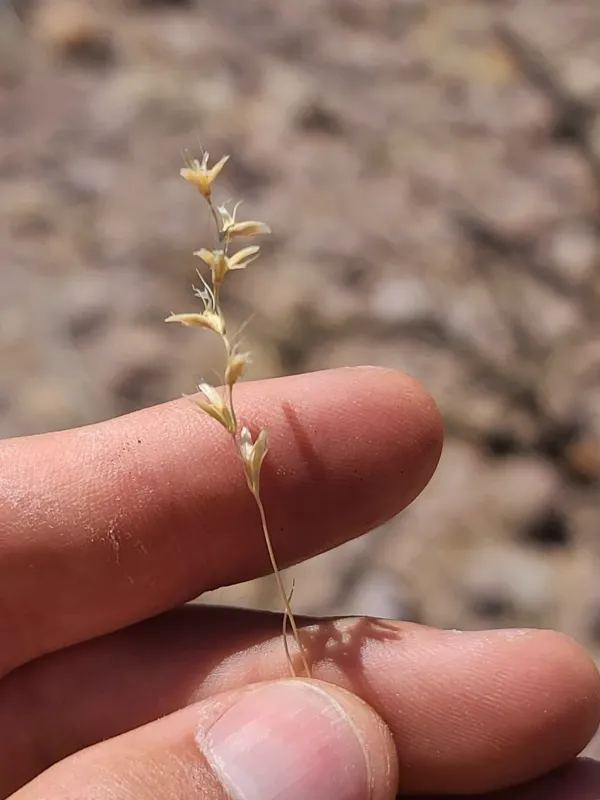
Description
Growing requirements
Hilaria belangeri, commonly known as curly-mesquite, is a perennial grass species belonging to the Poaceae family. It is widely recognized in agricultural and ecological circles for its exceptional durability and ability to thrive in challenging, arid environments.
Native to the southwestern United States and northern Mexico, this grass is a key component of dry prairie ecosystems. Its evolutionary history in regions with limited rainfall and high temperatures has equipped it with specialized survival mechanisms, including deep root systems and drought-induced dormancy.
Botanically, Hilaria belangeri is distinguished by its short, curly growth habit and its ability to spread through stolons. This vegetative propagation creates a dense mat of vegetation that helps the plant colonize new areas and maintain ground cover even under harsh conditions.
The plant has specific climatic requirements, favoring full sun and well-drained conditions. It is remarkably heat-tolerant and can survive prolonged dry spells by entering a dormant state, rapidly resuming active growth once moisture levels become sufficient.
It shows broad soil adaptability, growing successfully on rocky, alkaline, and nutrient-poor soils. This versatility makes it an excellent candidate for land reclamation projects, particularly in areas prone to erosion or suffering from soil degradation.
Yield
The primary economic use of Hilaria belangeri is as high-quality forage for livestock. It provides essential nutrients for cattle, sheep, and goats, serving as a reliable food source in arid rangelands where more demanding forage crops would fail to grow.
Yield productivity is heavily dependent on grazing management practices. Implementing a rotational grazing schedule is critical to ensure that the plants have adequate time to recover, thereby maintaining the long-term health and biomass output of the pasture.
Beyond its feed value, the grass acts as an effective erosion control agent. Its dense network of stolons and roots anchors the soil, significantly reducing the impact of wind and water erosion on vulnerable landscapes and hillsides.
In addition to its grazing benefits, Hilaria belangeri is highly competitive against invasive species. By forming a thick, uniform carpet, it effectively prevents the establishment of unwanted weeds, reducing the need for chemical herbicides on rangeland areas.
Agricultural efforts are focused on the sustainable management of existing stands rather than intensive cultivation. Its reliance on natural vegetative spread ensures that with proper stewardship, these pastures can remain productive for many years.
Main diseases and pests
The greatest threat to Hilaria belangeri stands is overgrazing, which depletes root reserves and weakens the sod. When subjected to continuous heavy pressure, the grass loses its ability to regenerate, leading to increased soil exposure and decreased forage yield.
While generally hardy, the grass can be susceptible to localized fungal issues during exceptionally humid periods. However, these threats are minimal compared to the impact of human-induced pressure or significant changes in local hydrological conditions.