
Hilaria mutica
Hilaria mutica
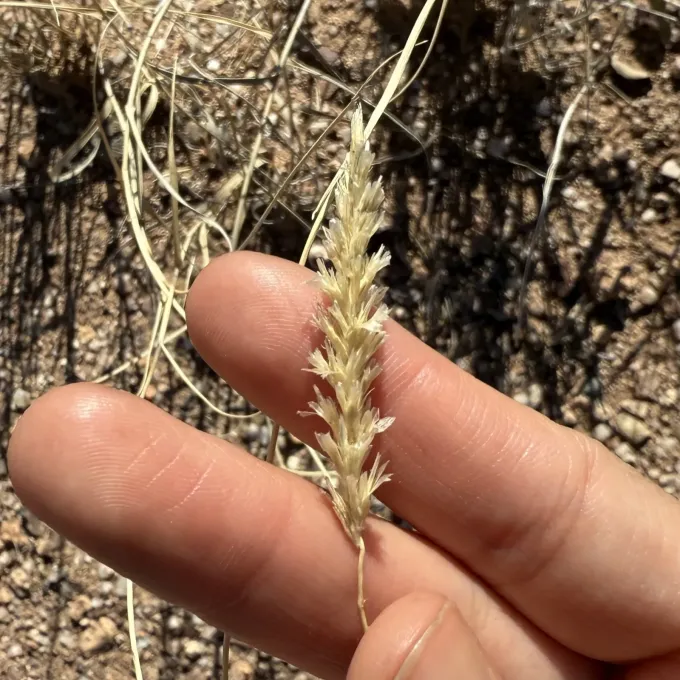
Description
Sowing dates
Hilaria mutica, commonly known as tobosa grass, is a perennial warm-season grass belonging to the Poaceae family. It is highly valued for its ability to form dense, sod-forming mats, which are effective in preventing soil erosion in harsh, arid environments.
Propagation is primarily achieved through rhizomes and stolons, allowing the plant to colonize open spaces efficiently. In cases where seeding is required, the process is best initiated in late spring when the soil temperature consistently supports rapid germination.
Successful sowing depends on the preparation of a clean seedbed free from competitive weed species. Since tobosa seeds are relatively small, precise depth control is essential, typically requiring surface broadcasting followed by light harrowing to ensure optimal soil contact.
Establishment of new stands is known to be slow. Therefore, limiting grazing pressure during the first two seasons is critical to ensure that the root systems develop sufficiently to support the plant's long-term survival and spread.
Agronomists suggest that moisture availability during the initial germination phase is the most limiting factor. If rainfall is insufficient, supplemental irrigation may be necessary to guarantee the establishment of a uniform and healthy grass stand.
Growing requirements
Hilaria mutica is well-adapted to heavy clay soils that retain moisture, which is vital in its native range of the southwestern United States and Mexico. It thrives in regions with intermittent precipitation, utilizing periodic floods to support growth.
This grass is a C4 species, meaning it requires high levels of solar radiation to achieve maximum photosynthetic efficiency. It is strictly sun-loving and will decline rapidly if shaded by trees, shrubs, or dense woody vegetation.
Soil chemistry requirements are flexible, with the grass showing good tolerance for alkaline and slightly saline conditions. However, it is highly sensitive to waterlogged environments and requires well-drained slopes or flats to maintain root health.
Temperature tolerance is one of the species' defining characteristics. It is highly resilient to intense summer heat and can withstand significant dormant periods during winter, provided the root crown remains protected from extreme mechanical disturbance.
Maintenance of the stand often involves controlled burning or mechanical mowing during the late winter dormancy period. This practice removes old, low-quality growth and stimulates new spring shoots, significantly improving the overall nutrient density of the pasture.
Yield
The yield of Hilaria mutica is highly correlated with seasonal precipitation patterns. While it is not intended for intensive high-yield hay production, it provides a stable and reliable base of forage for cattle, sheep, and goats in arid regions.
Nutritional value peaks during the active growing season. During this phase, the protein content is sufficient to support livestock development; however, as the plant matures and enters dormancy, its nutrient levels drop significantly.
Management through rotational grazing is the most effective way to optimize biomass output. By allowing periodic rest cycles, the plant can replenish its carbohydrate stores in the rhizomes, ensuring regrowth and long-term sustainability of the rangeland.
Yield estimation is conducted by measuring dry matter production per unit area. Experienced range managers utilize these metrics to adjust stocking rates, preventing overgrazing which is the primary cause of stand decline.
While the forage quality is average compared to cultivated temperate grasses, the resilience and drought-hardiness of tobosa grass make it an economically essential resource in areas where more intensive forage crops simply cannot survive.
Main diseases and pests
Despite its toughness, Hilaria mutica is susceptible to insect pests, particularly grasshoppers during drought cycles. Large outbreaks can defoliate entire pastures, significantly reducing the biomass available for grazing livestock.
Fungal diseases are generally rare but can occur under conditions of excessive nitrogen fertilization or poor air circulation. Proper pasture management and avoiding over-enrichment of the soil are the primary preventative measures.
Overgrazing remains the greatest threat to the stability of the grass stand. When livestock are allowed to graze too closely or too frequently, the sod-forming ability of the grass is weakened, creating openings for invasive weeds to colonize.
Competition from exotic or aggressive invasive plant species can crowd out native tobosa grass. Integrated weed management, including mechanical removal or selective spot-spraying, is sometimes necessary to maintain the dominance of the primary crop.
Finally, environmental degradation, including soil compaction from excessive trampling, can inhibit the plant’s stolon growth. Managing cattle movement is therefore a key aspect of preventing stand degradation and maintaining soil health.