
Smooth cypress
Hesperocyparis glabra
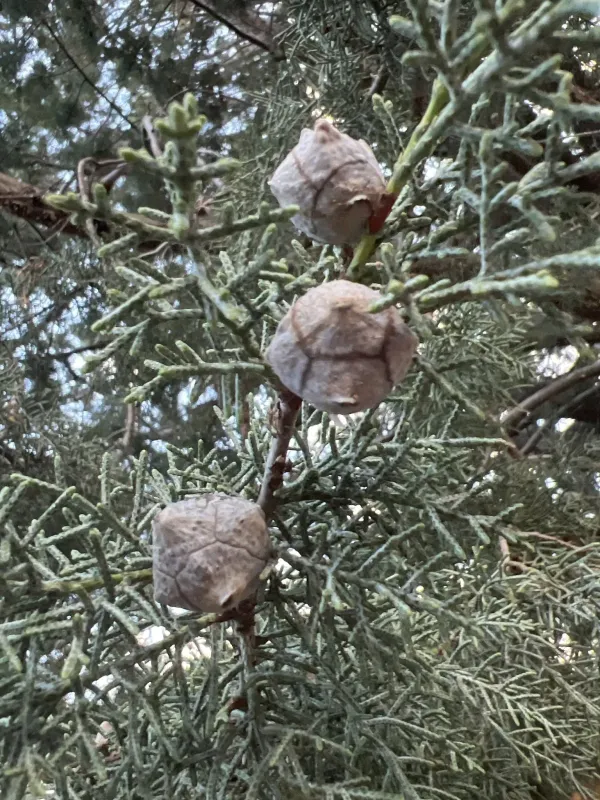
Description
Growing requirements
The Smooth cypress (Hesperocyparis glabra) is a member of the Cupressaceae family. It is an evergreen conifer, well-known for its smooth, exfoliating bark that peels away to reveal a vibrant reddish-brown trunk underneath, and its dense, conical shape.
Native to the arid regions of Arizona, USA, this species has evolved to thrive in dry conditions. Its natural distribution spans rocky hills and canyons, where it demonstrates remarkable resilience to extreme heat and prolonged dry spells.
Cultivation requires well-draining, sandy, or rocky soil. The species is highly intolerant to heavy, clay-based soils that retain moisture, as these conditions rapidly lead to root rot and other physiological stressors.
This tree requires full sun exposure to maintain its dense foliage and classic silhouette. When planted in shaded environments, the tree tends to become spindly and loses the intense color of its grey-green needles.
A crucial part of its care is maintaining proper spacing to ensure adequate air circulation around the tree. This helps mitigate the risk of fungal infections, which are more prevalent in stagnant, humid microclimates.
Main diseases and pests
The most serious disease affecting the Smooth cypress is Seiridium canker. This fungal pathogen causes sunken lesions on branches and stems, eventually girdling them and leading to branch dieback and overall decline of the tree health.
Pest pressure is primarily driven by the cypress aphid (Cinara cupressi). These insects infest the foliage, causing significant yellowing and needle drop, which detracts from the tree's ornamental value and can stunt growth.
Root pathogens such as Phytophthora can become a major threat if the tree is overwatered or planted in poorly drained soil. Symptoms include wilting, chlorosis, and sudden death of the entire plant.
Management strategies involve rigorous sanitation, including the pruning of infected wood, and the application of fungicides during periods of high humidity. Chemical interventions should be timed based on regular monitoring.
- Monitor for discoloration on bark
- Prune and destroy infected branches
- Maintain soil drainage at all times
- Apply systemic insecticides if infestation is heavy
- Avoid overhead irrigation to keep foliage dry