
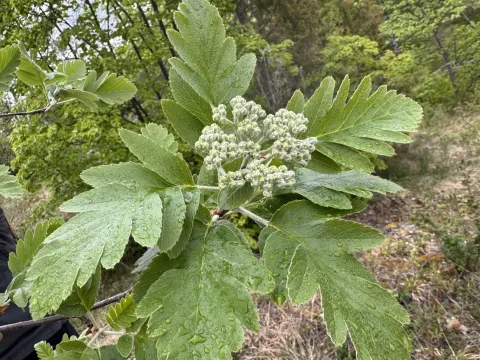
Hedlundia
Hedlundia
The planting of Hedlundia saplings is best performed during the autumn period when the tree is dormant, or in early spring before sap flow begins.
What the section contains
 Arran whitebeam
Hedlundia pseudofennica
Arran whitebeam
Hedlundia pseudofennica
 Austrian whitebeam
Hedlundia austriaca
Austrian whitebeam
Hedlundia austriaca
 English whitebeam
Hedlundia anglica
Hedlundia borbasii
Hedlundia borbasii
Hedlundia minima
Hedlundia minima
English whitebeam
Hedlundia anglica
Hedlundia borbasii
Hedlundia borbasii
Hedlundia minima
Hedlundia minima
 Ley's whitebeam
Hedlundia leyana
Ley's whitebeam
Hedlundia leyana
 Semi-pinnate whitebeam
Hedlundia semipinnata
Semi-pinnate whitebeam
Hedlundia semipinnata
 Swedish whitebeam
Hedlundia intermedia
Swedish whitebeam
Hedlundia intermedia
Hedlundia
For establishing an orchard, it is essential to choose sites with ample sunlight, as shade causes canopy thinning and significantly reduces both fruit quality and yield.
When planting saplings, a distance of at least 4 to 5 meters between trees must be maintained to ensure proper airflow and minimize the risk of fungal infections.
Planting holes should be prepared in advance by incorporating organic fertilizers and fertile topsoil, which aids in the quick adaptation of the root system.
A crucial step is installing proper support and applying mulch to the base to retain soil moisture and prevent competitive weed growth.
This genus, belonging to the Rosaceae family, demonstrates high adaptability to temperate climates and can withstand significant drops in winter temperatures.
The crop prefers loamy or sandy loam soils with moderate moisture levels, though it is highly sensitive to waterlogging in the root zone.
Throughout the growing season, the tree requires regular irrigation, especially during prolonged droughts, as water stress negatively impacts fruit development.
Agricultural practices include systematic pruning, covering sanitary, shaping, and rejuvenation methods to maintain the tree's productivity at a consistently high level.
Applying mineral complexes with a focus on phosphorus and potassium during the autumn strengthens the plant's immunity and prepares it for the winter season.
The productivity of Hedlundia depends directly on strict adherence to agricultural standards, soil quality, and the age of the specific specimen.
Fruit bearing typically commences 3 to 5 years after planting, gradually increasing as the structural branches mature and the canopy develops.
On average, one mature tree can yield between 20 to 50 kg of berries, which are noted for their high nutritional and dietary values.
To enhance yields, it is recommended to plant multiple pollinator varieties in the same plot, as cross-pollination significantly improves fruit set.
Economic utilization of the berries includes the food industry, where they are used to create vitamin-rich drinks, jams, marmalades, and valuable medicinal extracts.
The main threats to this crop are fungal diseases, such as scab, moniliosis, and various leaf spots, which affect both foliage and fruit production.
Common insect pests include the rowan moth, aphids, and weevils, which can cause significant damage to the harvest and weaken the overall tree health.
Preventive spraying with insecticides is recommended in early spring before bud break and after the flowering phase has concluded.
Disease management involves the regular collection and disposal of fallen leaves, as well as the timely pruning of damaged or dead branches from the crown.
Biological pest control methods are becoming increasingly popular, allowing for effective management of harmful organisms without compromising the garden's ecology.
Harvesting should be conducted at the stage of full technical maturity, once the berries have achieved their characteristic rich color and desired firmness.
This period usually occurs in September or October, depending on the climatic zone and specific varietal traits of the Hedlundia species.
Berries are best harvested in full clusters using secateurs to avoid skin damage and to maximize the shelf life and visual appeal of the produce.
Collected fruit should be stored in a cool, well-ventilated location to extend the availability of fresh berries for several weeks.
For long-term preservation, freezing or dehydration techniques are employed, allowing the berries to retain most of their vitamins and active biological compounds.