
Ley's whitebeam
Hedlundia leyana
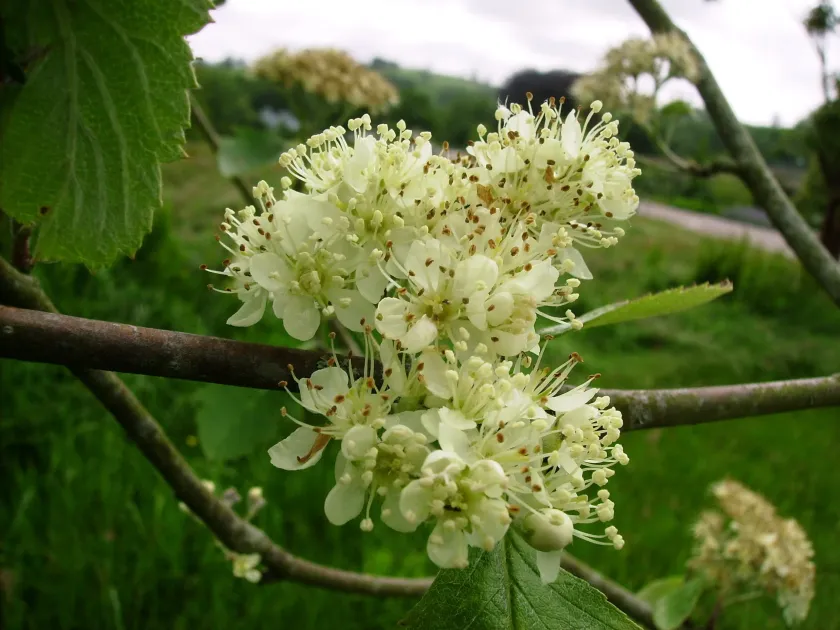
Description
Growing requirements
Ley's whitebeam (botanical name Hedlundia leyana) is a distinct species belonging to the Rosaceae family. It is a rare tree known for its specific ecological requirements and historical origin in the mountainous regions of Wales.
The tree thrives in cool, temperate climates, displaying remarkable adaptation to high-altitude environments. It is well-suited for regions that experience consistent moisture and avoids extreme heat, making it an interesting candidate for specialized arboriculture.
Regarding soil, Hedlundia leyana prefers well-drained, fertile sites with a slightly acidic to neutral soil profile. High water retention in heavy clays should be corrected with organic amendments like compost or sand to ensure optimal root health.
The cultivation of this species requires careful site selection. It performs best in positions with full sun to light shade, where adequate light penetration can support the health of its foliage and overall vigor throughout the growing season.
Maintenance tasks include regular weeding around the base and mulching to retain soil moisture. As a rare plant, it benefits from minimal interference and stable environmental conditions, allowing it to develop its natural habit without excessive pruning.
Main diseases and pests
Common phytosanitary concerns include fungal pathogens such as powdery mildew and leaf spot. These issues typically manifest in stagnant air conditions or prolonged periods of high humidity during the summer months.
Insect pests, such as aphids and various leaf-mining insects, may occasionally infest the foliage. Monitoring the undersides of leaves and the condition of tender new growth is vital for maintaining the tree's health.
Bark damage caused by deer or rodents represents a significant threat to young specimens, potentially leading to long-term structural weakness or entry points for wood-decaying fungi.
The prevention of these threats is achieved through sound horticultural practices, such as maintaining proper spacing, ensuring good air circulation, and avoiding the overuse of nitrogenous fertilizers that encourage soft, vulnerable growth.
If chemical interventions are necessary, they should be applied judiciously, favoring targeted treatments that do not disrupt the surrounding ecological balance or impact beneficial pollinators that visit the tree during flowering.