
English whitebeam
Hedlundia anglica
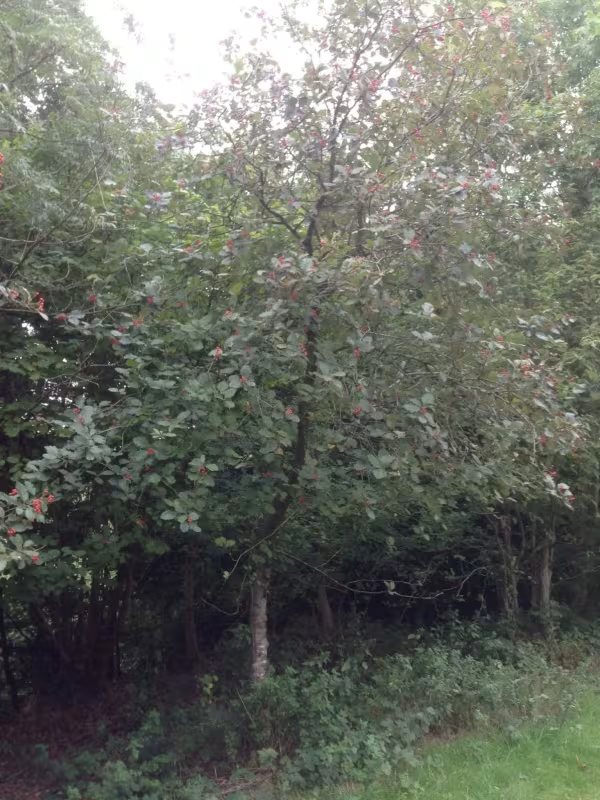
Description
Growing requirements
English whitebeam (Hedlundia anglica), previously classified under Sorbus, is a distinct member of the Rosaceae family. It is a hybrid species native to the British Isles, often found in rocky, calcareous landscapes.
The species prefers well-drained, lime-rich soils and thrives in locations that provide plenty of sunlight. It is remarkably resilient to diverse weather conditions and demonstrates strong adaptability to cold climates.
Botanically, it is a small to medium-sized tree with leaves that feature a notable silvery-grey undersurface. The blossoms, appearing in spring, are creamy-white, providing aesthetic value as well as serving as a pollinator-friendly resource.
Agronomic management involves periodic pruning to maintain tree health and canopy shape. Proper spacing is crucial during planting to ensure the tree receives adequate light penetration and air movement for balanced growth.
In landscape architecture, it is highly valued for its ornamental form and robustness. Its berries are consumed by wildlife, making it an excellent candidate for conservation planting and biodiversity-focused gardening.
Main diseases and pests
Like many species in the Rosaceae family, Hedlundia anglica is susceptible to fungal infections such as powdery mildew. This condition often thrives in environments with poor air circulation or high humidity.
Rust diseases, characterized by localized leaf spotting, can also affect the tree during wet seasons. Regular sanitary pruning and removing fallen debris around the base are essential preventative measures.
Pest management focuses on controlling aphids and leaf-eating caterpillars. Keeping the tree vigorous through correct watering and fertilization helps the plant naturally withstand minor infestations.
Fire blight is a significant threat that requires careful monitoring. Growers should watch for blackened shoots and immediately prune any infected areas while disinfecting tools between each cut to prevent spread.
Maintaining high soil fertility and optimal moisture levels strengthens the tree's natural defense mechanisms. Proactive monitoring during the peak growing season ensures early detection and management of potential threats.