
Swedish whitebeam
Hedlundia intermedia
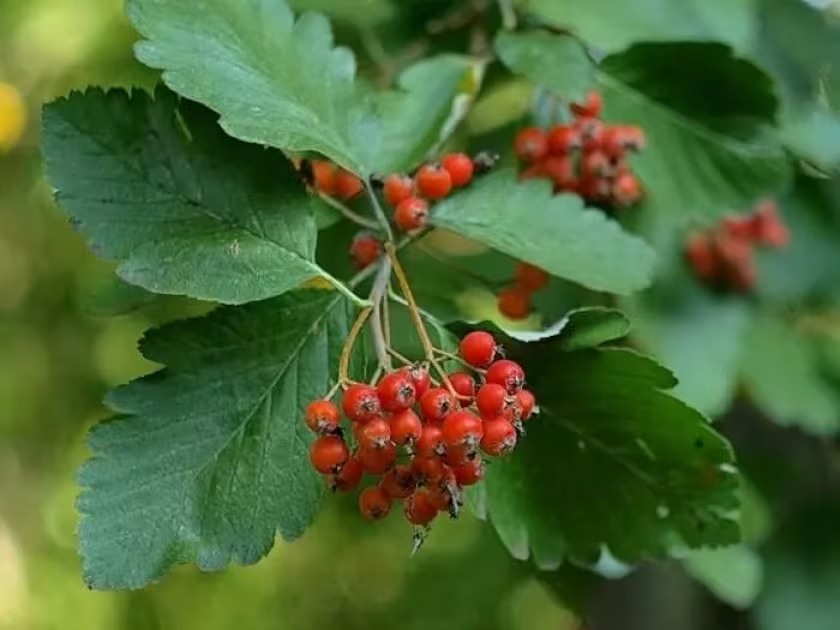
Description
Growing requirements
The Swedish whitebeam (Hedlundia intermedia), historically known as Sorbus intermedia, is a deciduous tree belonging to the Rosaceae family. It is a natural hybrid known for its structural beauty and durability.
This tree thrives in temperate climates and is highly regarded for its extreme hardiness against cold weather and harsh winds. Its ability to tolerate salt-laden air makes it an excellent choice for coastal and urban environments.
Regarding soil preferences, it is adaptable but performs best in fertile, well-drained loamy soils. It requires a neutral to slightly acidic pH level and does not tolerate waterlogged conditions which can lead to root suffocation.
Proper planting involves selecting a site with full sunlight, although the tree displays good tolerance to partial shade. Ensuring adequate spacing is vital for the development of its characteristic rounded or oval crown.
General maintenance includes annual structural pruning to maintain the desired shape and regular irrigation during the initial years after planting to establish a strong root system in the landscape.
Main diseases and pests
Like many species in the Rosaceae family, the Swedish whitebeam can be susceptible to fire blight, a bacterial disease. Early detection and pruning of infected branches are essential to manage this condition.
Insect pests, including aphids and leaf miners, may attack the foliage during the growing season. Integrated pest management strategies, such as attracting beneficial predators, are recommended for long-term health.
Fungal leaf spot diseases may appear during seasons with high humidity and poor air circulation. Cleaning up fallen leaves in the autumn is a primary preventive measure to reduce potential inoculum.
Damage to the bark caused by rodents or mechanical impact during gardening work can expose the tree to wood-rotting pathogens. Protecting the lower trunk with guards is advised for young specimens.
Overall, the resilience of Hedlundia intermedia allows it to be a low-maintenance option for public parks and private gardens, requiring minimal intervention when established correctly.