
Gregg's ash
Fraxinus greggii A. Gray
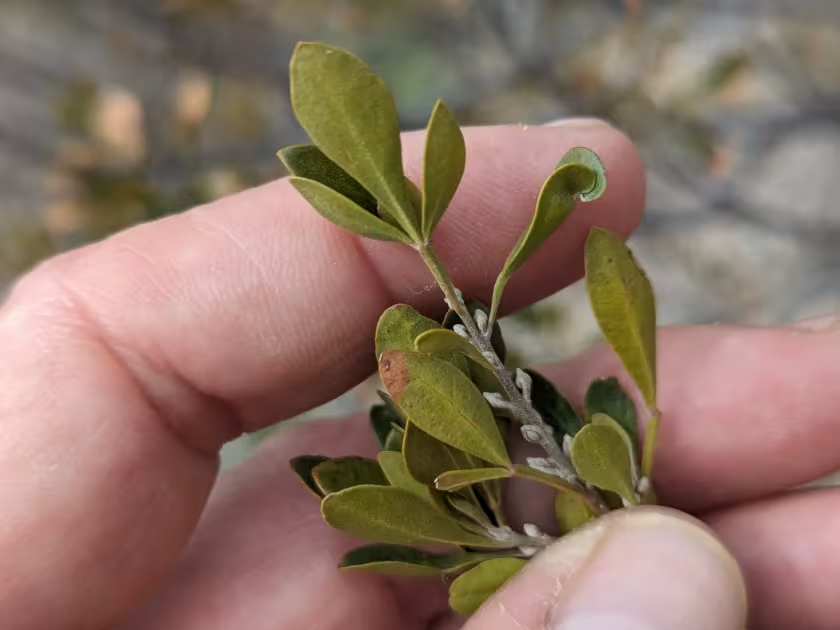
Description
Growing requirements
Gregg's ash (Fraxinus greggii) is a distinctive species belonging to the Oleaceae family, naturally found in the arid landscapes of Northern Mexico and the southwestern United States.
Botanically, it is a small, slow-growing evergreen or semi-evergreen shrub that can reach heights of 10 to 20 feet. It is characterized by its small, glossy, pinnately compound leaves and dark gray bark that becomes fissured with age.
This species is highly prized for its exceptional tolerance to extreme heat and drought. It thrives in full sun and is well-adapted to limestone-based soils and rocky terrain, making it an excellent candidate for xeriscaping.
Regarding cultural requirements, it needs excellent drainage to prevent root rot. It is not suitable for areas with frequent waterlogging or high humidity, as it prefers the dry conditions of its native habitat.
In landscaping, it is used for naturalistic screens, hedges, and as a structural element in gardens where water conservation is a priority. Its delicate appearance provides a beautiful contrast to more robust succulents or cacti.
Main diseases and pests
The most significant threat to Gregg's ash is root rot caused by Phytophthora or other fungi, which almost exclusively stems from over-irrigation and poor drainage in the planting site.
Pest issues often include scale insects that cluster on the stems and leaf undersides, potentially weakening the plant if infestations are left unchecked for long periods.
Aphids can occasionally be a problem during the spring flush of new growth, often attracting ants and promoting the growth of sooty mold on the foliage surface.
Drought-stressed plants are generally more resilient, but extreme neglect combined with nutrient deficiencies in very poor soils may result in stunted growth and thinner canopy density.
Integrated pest management, combined with proper site selection that mirrors the plant's natural environmental needs, effectively minimizes the risk of significant health issues.