
Green kangaroo paw
Anigozanthos viridis Endl.
Description
Growing requirements
The green kangaroo paw (Anigozanthos viridis) is an herbaceous perennial plant that belongs to the Haemodoraceae family. It is native to the southwestern regions of Western Australia.
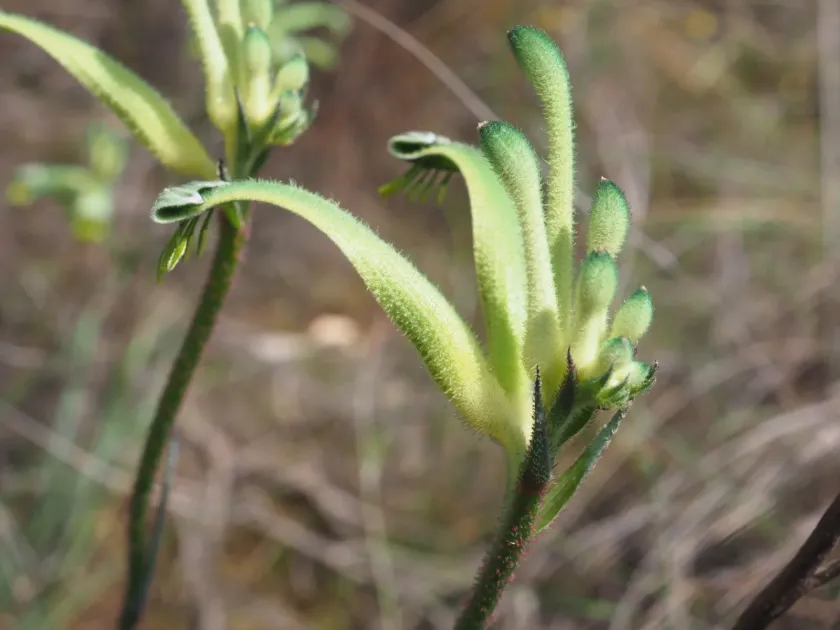
This species is characterized by its sword-shaped leaves growing in basal clumps and distinctive, vibrant green flowers that are covered in fine, hair-like structures, which give them a fuzzy texture.
In terms of light, this plant thrives in full sun exposure. It requires high light intensity to sustain its growth, bloom vigorously, and maintain the structural integrity of its flower stalks.
The plant demands well-draining, sandy, or gravelly soils. It does not tolerate heavy clay or nutrient-dense, moisture-retaining soils, which can lead to rapid root rot and plant death.
Regarding climate, it is adapted to the Mediterranean-style climate of its native range. It must be protected from frost and freezing temperatures, making it suitable for container gardening in colder regions.
Main diseases and pests
The most significant threat to Anigozanthos viridis is root rot caused by pathogens like Phytophthora, which thrive in poorly drained soil or excessive moisture environments.
Ink spot disease, caused by the fungus Alternaria alternata, is a common problem. It appears as dark lesions on the leaves, especially when humidity is high and airflow is stagnant.
Garden pests like slugs and snails can cause substantial damage to the plant, particularly in the early stages of development or when the plants are placed outdoors.
In greenhouse or indoor environments, spider mites and mealybugs can colonize the plant. They weaken the host by draining sap, which can lead to stunted growth and leaf chlorosis.
Effective management includes maintaining a dry crown area during irrigation and ensuring excellent air circulation to discourage fungal growth and pest colonization.