
Anigozanthos humilis
Anigozanthos humilis Lindl.
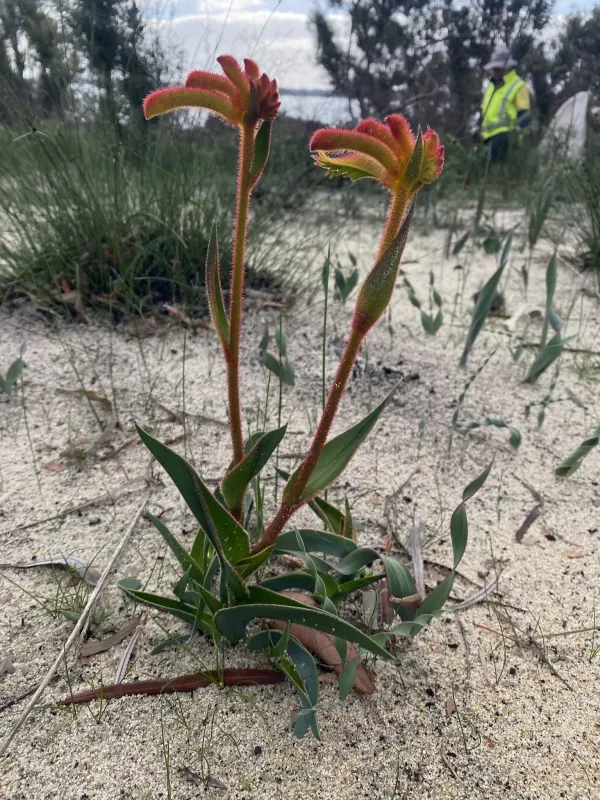
Description
Sowing dates
Anigozanthos humilis, commonly known as catspaw, is propagated via seeds or division. Seeds should be sown in late winter in a well-draining, sandy-based seed compost.
The germination process requires consistent warmth, ideally between 20 and 25 degrees Celsius, and high ambient humidity to break seed dormancy effectively.
Once seedlings have developed at least two pairs of true leaves, they should be carefully pricked out into individual small pots to avoid root disturbance.
Vegetative propagation via rhizome division is best performed at the onset of the active growing season, ensuring each section has healthy roots and new shoots.
Young plants need to be acclimatized gradually to brighter light conditions to prevent scorching the delicate foliage before they reach maturity.
Growing requirements
Belonging to the Haemodoraceae family, this species is native to Western Australia, where it thrives in sandy, nutrient-poor, and well-drained soils.
The plant demands full, direct sunlight to maintain its compact growth habit and produce its signature, fuzzy, claw-like flowers throughout the season.
Soil chemistry is critical; the medium must be low in phosphorus, as high levels of this element can be toxic to many Australian native flora.
While the plant is somewhat drought-tolerant once established, it requires regular, controlled watering during the peak flowering stage to prevent dehydration.
In temperate zones, it is strictly a container plant that must be moved indoors before the first frosts to protect its sensitive root system from freezing.
Main diseases and pests
Root rot is the most significant threat to the plant, usually triggered by poor drainage or excessive soil moisture that encourages fungal pathogens like Phytophthora.
Pests such as aphids and spider mites frequently target the succulent foliage, particularly in indoor environments where air circulation is limited and humidity is low.
Ink spot disease, caused by the fungus Alternaria, can manifest as dark, unsightly blotches on the leaves, severely diminishing the plant's ornamental value.
Cultural control, such as ensuring adequate spacing between plants and keeping the foliage dry, is the primary method for preventing fungal outbreaks.
If chemical intervention becomes necessary, use only products explicitly labeled as safe for sensitive ornamental plants, as some pesticides can cause phytotoxicity.
Harvesting
Anigozanthos humilis is highly valued in the cut flower industry for its unique, velvet-like inflorescences that offer a distinct architectural element to arrangements.
Flowers should be harvested when approximately one-third of the florets on the spike are open; this ensures maximum vase life and aesthetic appeal for the end-user.
For dried floral displays, the stalks should be harvested during dry weather and hung upside down in a dark, airy room to retain their vibrant natural colors.
Commercial growers often use specialized harvesting tools to ensure clean cuts, which minimizes tissue damage and reduces the risk of post-harvest infection.
The shelf life of fresh-cut catspaw can be extended by using clean water and keeping the stems free from foliage that might submerge and promote bacterial rot.