
Albany Catspaw
Anigozanthos preissii Endl.
Description
Sowing dates
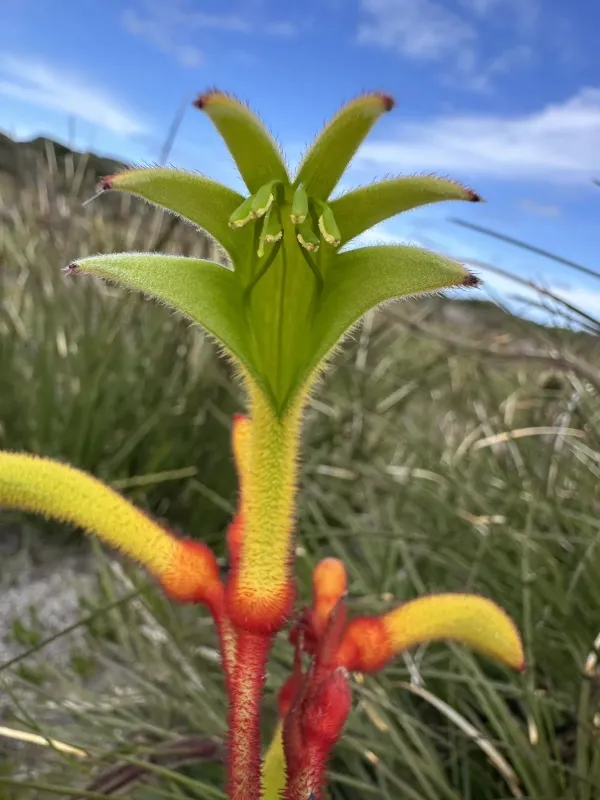
Albany Catspaw (Anigozanthos preissii) is a perennial herbaceous plant belonging to the Haemodoraceae family. Native to South-Western Australia, it is typically propagated through seed cultivation in controlled environments.
Sowing should be performed in the spring when soil temperatures reach 20-22 degrees Celsius. Seeds often require stratification or treatment with growth stimulants to enhance germination rates.
When cultivated in greenhouses or nurseries, providing adequate aeration of the growing medium is crucial. Seeds should be sown no deeper than 0.5 cm, as light is required for successful development of the seedlings.
Germination is often uneven and may take 3 to 6 weeks depending on humidity levels. It is recommended to use peat-sand mixtures with a neutral pH level for optimal results.
Once two true leaves emerge, seedlings are pricked out into individual containers. The plant has a sensitive root system, so repotting should be conducted using the transfer method to avoid root disturbance.
Growing requirements
The culture has specific environmental requirements due to its Australian origins. Albany Catspaw requires intense sunlight throughout the entire vegetative growth period to thrive.
The soil environment must possess excellent drainage properties. Waterlogging is a critical factor, frequently leading to rapid root system collapse caused by the development of fungal infections.
The optimal temperature range for active growth is between 18 and 25 degrees Celsius. The plant does not tolerate sudden temperature fluctuations or drafts in controlled greenhouse environments.
Irrigation should be moderate and applied strictly at the base of the plant. Wetting the foliage during watering is strongly discouraged, as this encourages the development of black spots on the leaves.
Fertilization should involve specialized fertilizers with low phosphorus content, as plants in the Haemodoraceae family are highly sensitive to high concentrations of this element.
Yield
The economic use of Albany Catspaw is centered on the floriculture and landscape design industries. The primary commercial product consists of high-quality cut flowers with a unique velvety texture.
The yield of inflorescences depends on the age of the plant and the intensity of light provided. In commercial greenhouses, one plant can produce up to 10-15 marketable flower spikes per season.
The plant is highly valued by florists for its decorative appeal and longevity in vases. The flowers retain their shape and color intensity for long periods, making them sought-after in the premium floral market.
Yield indicators are directly dependent on planting density; it is optimal to space plants at a density of no more than 4-6 specimens per square meter to ensure proper ventilation.
With proper agronomic practices, the plant's lifecycle in a single location lasts up to 3-5 years, after which inflorescence productivity declines, necessitating the renewal of the planting bed.
Main diseases and pests
The most common threat to Albany Catspaw is "Ink Spot" disease, caused by pathogenic fungi. This disease manifests as dark spots on the leaves that spread rapidly under high humidity conditions.
Pests such as spider mites and mealybugs often attack weakened plants in low-humidity environments. Regular inspection of the underside of the leaves allows for early intervention and management of the problem.
Root rot is typically a consequence of poor irrigation management and the use of heavy, non-porous soil mixtures that do not provide adequate oxygen to the roots.
- Fusarium wilt
- Ink Spot disease
- Spider mites
- Aphids
Preventive measures include the application of systemic fungicides and insecticides. Implementing strict quarantine procedures when introducing new plant stock into the nursery is essential.
Harvesting
Harvesting of the flower spikes is performed during the morning hours when the inflorescences are in the early stages of opening. Use only sharp, sterilized tools for the harvest.
The cut is made as close to the leaf rosette as possible, taking care not to damage the growth point. This practice ensures rapid plant recovery and the potential for new shoot formation.
Immediately after harvesting, the flowers should be placed in cool water with disinfectant additives to prevent the development of bacteria within the plant's vascular system.
Transportation requires maintaining a temperature range of 5-8 degrees Celsius. The flowers of this plant are extremely sensitive to ethylene gas, so they should be kept away from ripening fruits.
Pre-sale preparation includes cleaning the stems of damaged leaves and sorting the product based on stem length and inflorescence color intensity.