
Goeppertia roseopicta
Goeppertia roseopicta (Linden) Borchs. & S. Suárez
Description
Growing requirements
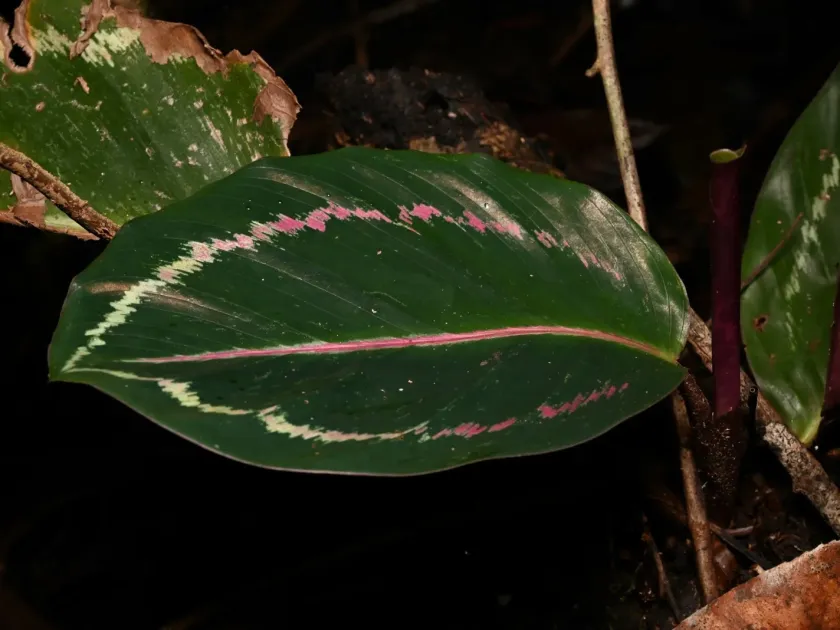
Goeppertia roseopicta is a perennial ornamental plant belonging to the Marantaceae family. Originally native to the rainforests of Brazil, it is highly valued for its striking, patterned foliage featuring distinct pink veins and deep green textures.
In a controlled environment, this plant requires high humidity levels, ideally above 70%. In commercial or greenhouse production, automated misting systems are essential to replicate its natural tropical habitat and prevent leaf edges from drying out.
The ideal temperature for cultivation ranges from 20 to 25 degrees Celsius. The crop is sensitive to thermal shock, so it must be protected from cold drafts and direct exposure to heating or air conditioning vents.
Lighting requirements are specific: bright, indirect sunlight is necessary. Direct exposure to the sun will bleach the vivid colors of the leaves and may lead to irreversible scorched tissue patches on the foliage.
The planting substrate must be well-draining, loose, and slightly acidic. A mixture containing high-quality peat, perlite, and charcoal is commonly used to ensure healthy root aeration and prevent compaction.
Main diseases and pests
Spider mites are the most common pest, especially in environments where humidity is not strictly maintained. These pests thrive in dry air and can quickly weaken the plant by feeding on cell sap.
Root rot is a significant risk, typically caused by overwatering or poor drainage. It is critical to ensure that the potting medium does not remain waterlogged, as this leads to rapid decay of the root system.
Scale insects can occasionally infest the stems and undersides of leaves. Regular monitoring and physical removal, or the application of horticultural oils, are effective control measures.
Fungal leaf spots can occur if the foliage remains wet for extended periods in cooler temperatures. Maintaining proper air circulation is a key preventative practice for this decorative crop.
Nutrient deficiency, specifically of magnesium or iron, can cause interveinal chlorosis. Maintaining a balanced fertilization schedule with micronutrients helps keep the foliage vibrant and healthy.