
Goeppertia warscewiczii
Goeppertia warscewiczii (L. Mathieu ex Planch.) Borchs. & S. Suárez
Description
Growing requirements
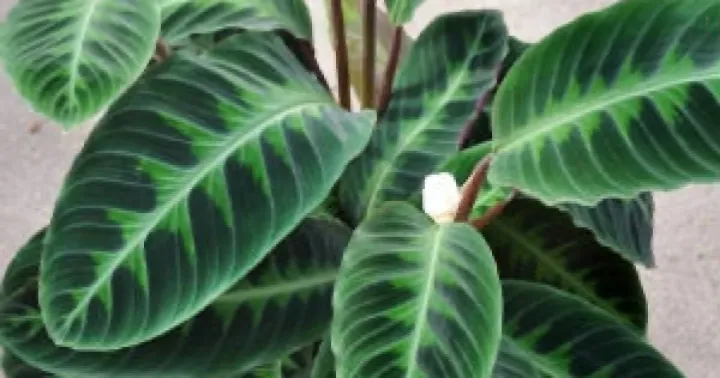
Goeppertia warscewiczii is a perennial ornamental plant belonging to the Marantaceae family. Originating from the tropical rainforests of Central and South America, it is highly valued for its lush, dark green velvety foliage that features unique light green patterns.
As a forest floor inhabitant, this crop thrives in environments with high humidity and indirect light. Botanical adaptation allows the leaves to change their orientation throughout the day, effectively capturing minimal sunlight available in the deep understory.
Agricultural requirements for this species include maintaining a stable temperature range between 18 and 25 degrees Celsius. The plant is extremely intolerant to cold drafts and sudden temperature fluctuations, which can lead to leaf drop and stunted growth.
Soil composition must be rich in organic matter, slightly acidic, and well-draining. A mix of peat, bark, and perlite is often used to ensure that the root system receives sufficient oxygen while remaining consistently moist but not waterlogged.
Watering needs to be precise, utilizing soft, room-temperature water. Maintaining humidity around 70 percent is crucial for keeping the velvety texture of the leaves healthy and preventing the edges from turning brown and brittle.
Main diseases and pests
Spider mites are the most common pest affecting the plant, especially in indoor environments where the air humidity drops below critical levels during the heating season.
Root rot, caused by overwatering or poor drainage, represents the most significant phytopathological threat to the viability of the crop.
Fungal infections, such as leaf spot, may occur if water is left on the leaves for extended periods without adequate air circulation around the canopy.
Scale insects can also infest the stems, requiring manual removal or the application of systemic insecticides safe for ornamental foliage plants.
Preventative measures include maintaining proper sanitation, regular inspection of the leaf underside, and ensuring that the soil surface dries slightly between irrigation cycles.