
Goeppertia ecuadoriana
Goeppertia ecuadoriana (H. A. Kenn.) Borchs. & S. Suárez
Description
Growing requirements
Goeppertia ecuadoriana is a perennial herb belonging to the Marantaceae family. Originally native to the tropical rainforests of Ecuador, this species is specialized for life in the shaded understory, where it thrives in constant humidity and filtered light conditions.
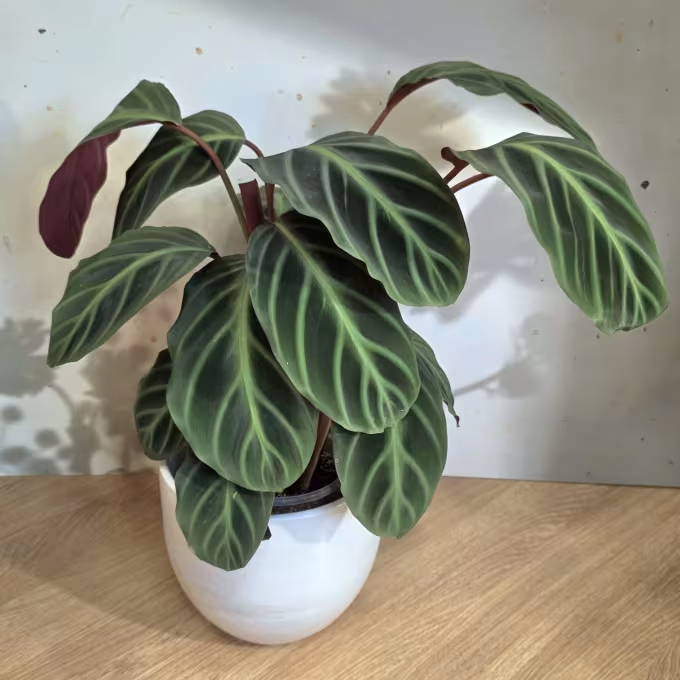
Botanically, the plant is recognized by its large, ornate leaves featuring distinctive patterns. These leaves are adapted to maximize light absorption in low-light environments. The plant typically spreads via rhizomes, which support its growth as a clump-forming perennial in the wild.
Climatic requirements for this crop are strict: it demands temperatures between 20°C and 26°C. It is extremely sensitive to thermal shock and requires protection from cold drafts, which can cause leaf curling and irreversible damage to the foliage tissue.
Soil conditions must prioritize aeration and water retention. A well-draining potting mix, typically composed of peat moss, perlite, and pine bark, is ideal. The substrate should be maintained slightly acidic to neutral to ensure optimal nutrient uptake for the root system.
Cultural management involves consistent moisture levels. The plant requires frequent, light irrigation with distilled or soft, filtered water to prevent mineral buildup and root stress. During the peak growing season, regular fertilization is recommended to maintain leaf vigor.
Main diseases and pests
The primary threats to Goeppertia ecuadoriana are arthropod pests, with spider mites being the most significant in indoor or controlled environments. These mites thrive in low-humidity conditions and can quickly devastate leaf tissue if left unchecked.
Scale insects and mealybugs represent persistent threats to the health of the plant. They tend to settle in the junctions between petioles and stems, making manual removal difficult. Systematic application of horticultural oils or approved insecticides is often necessary for control.
Fungal pathogens, particularly those causing root rot, are common results of overwatering. When the soil remains saturated for extended periods, the lack of oxygen leads to tissue decay, which often becomes an entry point for secondary infections.
Bacterial leaf spot is another major concern, often triggered by overhead irrigation or high density planting. Moisture trapped on the leaves provides an ideal environment for bacteria to multiply, leading to unsightly necrosis on the foliage.
Proactive management includes ensuring adequate airflow between plants and maintaining a clean growing area. By monitoring the underside of leaves for early signs of pests, growers can prevent outbreaks and maintain the aesthetic quality of the crop.