
Goeppertia louisae
Goeppertia louisae (Jacob-Makoy) Borchs. & S. Suárez
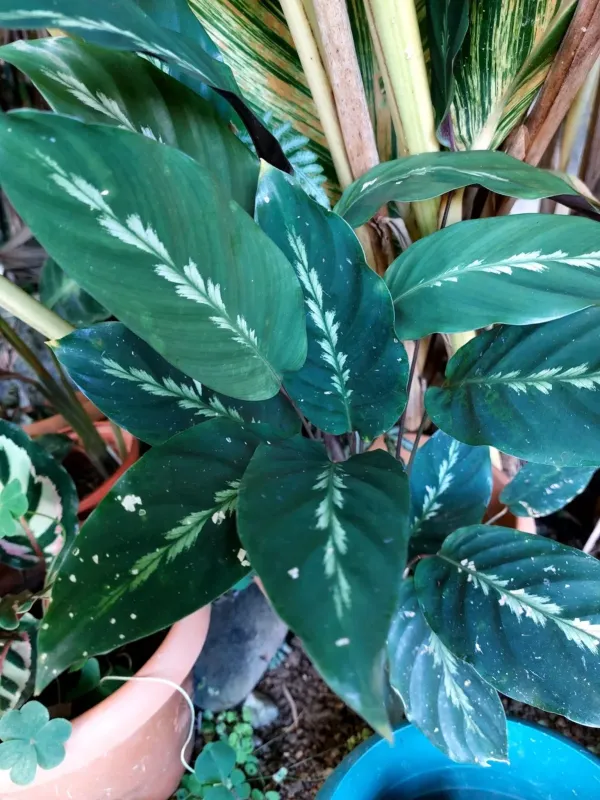
Description
Growing requirements
Goeppertia louisae is a perennial ornamental plant belonging to the Marantaceae family. Native to the tropical rainforests of Brazil, it thrives in shaded, high-humidity environments typical of the forest floor.
The plant requires a stable temperature range between 20 and 25 degrees Celsius. It is highly sensitive to cold air and drafts, which can cause the foliage to curl and lose its characteristic aesthetic appeal.
Cultivation requires a loose, well-draining, and slightly acidic substrate. A mix of peat, leaf mold, and perlite is generally recommended to ensure proper aeration while maintaining the moisture levels required for healthy growth.
Bright, indirect light is essential for the plant to maintain its variegated leaf patterns. Direct sunlight should be strictly avoided, as it can cause significant leaf scorch and dehydration of the delicate foliage.
Consistent watering with tepid, soft water is critical. The growing medium should remain moist but never waterlogged, as excessive standing water can lead to rapid root decay, which is common in many Marantaceae species.
Main diseases and pests
Common pests affecting Goeppertia louisae include spider mites, mealybugs, and scale insects. These pests thrive in indoor environments with low humidity, making proper environmental management the first line of defense.
Fungal diseases, such as root rot and leaf spot, are often caused by overwatering or poor air circulation. These conditions lead to the darkening of stems and the development of necrotic lesions on the leaves.
Integrated pest management involves regular leaf inspection and cleaning with a soft cloth to remove dust and prevent pest colonization. Systemic insecticides may be used if an infestation is detected early.
To prevent disease outbreaks, it is crucial to ensure that the pot has adequate drainage holes and that the plant is not kept in a stagnant air environment. Periodic repotting helps maintain substrate vitality.
Should the plant show signs of yellowing or drooping, growers should immediately check for moisture levels and pest presence, as these symptoms usually indicate a deviation from optimal care conditions.