
Goat willow
Salix caprea L.
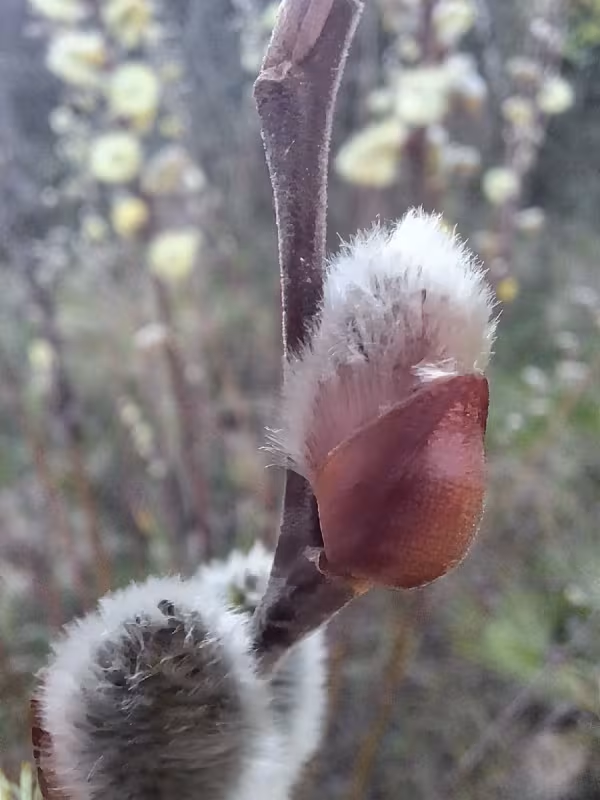
Description
Sowing dates
Propagation of Salix caprea is most effective via hardwood cuttings taken in late winter or early spring before bud break. Cuttings should be approximately 20–30 cm long and planted in well-drained, moist soil.
Seed propagation is possible but less common in commercial settings. Since the seeds are short-lived, they must be sown immediately after maturation on a prepared, moist substrate in a sheltered area.
When establishing a plantation, ensure proper spacing between trees to facilitate air circulation. Depending on the intended final use, spacing can range from 1 to 3 meters between individual plants.
Initial establishment requires consistent moisture. During the first growing season, supplemental watering is necessary to ensure the root system is well-developed before the onset of winter.
Soil preparation should involve the incorporation of organic matter to improve fertility and moisture-retention properties. This foundation supports robust early growth and long-term health of the willow.
Growing requirements
Goat willow belongs to the Salicaceae family and is known for its high adaptability to varying climatic conditions. It thrives in temperate regions, demonstrating excellent winter hardiness.
While the species prefers moist, fertile, and slightly acidic to neutral soils, it is more tolerant of drier conditions compared to many other willow species. It performs best in full sunlight but can tolerate partial shade.
Drainage is essential for optimal performance. Although the tree is water-loving, waterlogged conditions for extended periods can impede growth and invite root-related pathogens.
Routine maintenance includes structural pruning, usually performed in late spring after flowering. This practice promotes dense foliage and maintains the desired form, especially in ornamental varieties.
Fertilization is generally required only in poor soils. Applying a balanced nitrogen-based fertilizer in early spring can boost vegetative growth for those producing biomass for industry.
Yield
Salix caprea is highly valued as an early-season honey plant. Its catkins provide essential pollen and nectar to honeybee populations during early spring, making it a critical asset for apiaries.
The timber of the goat willow is used for light construction, tool handles, and traditional woven crafts. Its flexibility makes it a preferred choice for artisan basketry and fencing.
In agriculture, the willow acts as an important element in riparian buffers and soil stabilization projects. Its root structure is exceptionally effective at preventing soil erosion on sloped terrains.
Biomass production is a rising area of interest. Willow wood can be harvested for renewable energy sources or converted into animal fodder in regions where forage crops are limited.
Ornamental nursery stock is a significant commercial output. Specially grafted varieties, such as the weeping form, are highly sought after in the professional landscaping industry.
Main diseases and pests
The most common disease issues include willow rust and various fungal leaf spots. These pathogens often thrive in conditions with poor airflow and high humidity during the growing season.
Pests like willow beetles and aphids can significantly reduce the vitality of the tree by feeding on the leaves and young shoots. Severe infestations require prompt management to prevent stunted growth.
Integrated pest management, including the removal of deadwood and the use of eco-friendly insecticides, is recommended. Keeping the plantation clean and well-spaced is the best preventative strategy.
Stem-boring insects may pose a risk to mature trees. Regular monitoring for holes or frass on the bark is crucial for early detection and intervention before the structural integrity of the wood is compromised.
Fungal diseases are best managed by removing infected tissues immediately and applying appropriate fungicide treatments if the infection threatens the overall health of the tree population.