
Gazania maritima
Gazania maritima Levyns
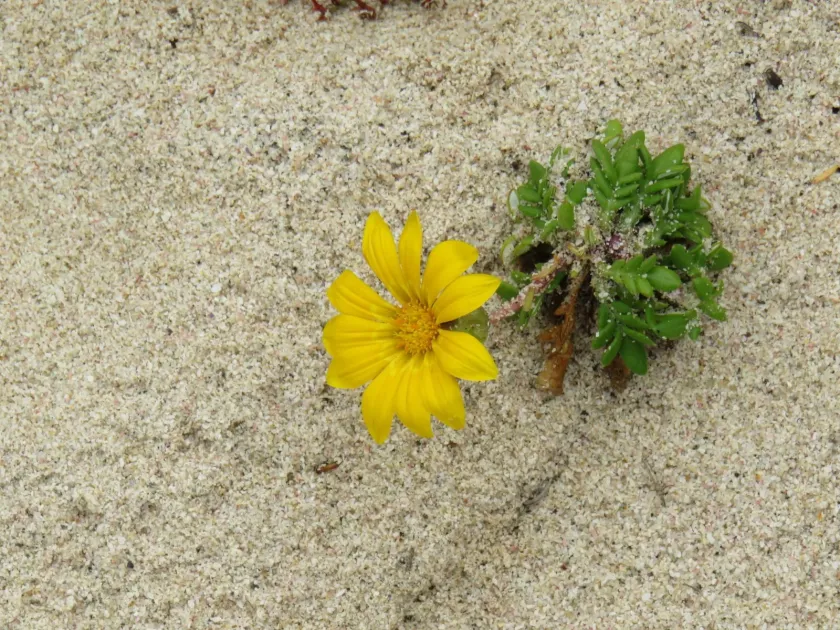
Description
Sowing dates
Gazania maritima seeds should be sown in late winter or early spring to ensure a robust plant ready for transplanting by the time frost risk ceases.
When starting indoors, use a well-drained, light potting mix and keep the containers in a bright location to prevent the seedlings from becoming leggy.
For direct outdoor sowing, wait until the soil has thoroughly warmed up, which typically coincides with the arrival of stable warm spring weather.
Seeds require a germination temperature between 18 and 22 degrees Celsius and should be barely covered with soil, as they need light to sprout.
After transplanting to their permanent location, ensure sufficient spacing between plants to allow for adequate airflow and healthy development.
Growing requirements
This member of the Asteraceae family thrives in coastal environments, exhibiting exceptional tolerance to saline soils and strong winds.
The plant requires full sun exposure to trigger the opening of its vibrant flower heads, as they remain closed during cloudy or shaded conditions.
Well-draining, sandy, or stony soil is essential to mimic its natural habitat and prevent the crown and root system from suffering due to excessive water.
Gazania maritima is highly drought-tolerant, meaning it can survive on minimal rainfall once established, making it ideal for xeriscaping.
Avoid heavy nitrogen fertilization, as it tends to encourage excessive foliage growth at the expense of the characteristic flowering density of the species.
Main diseases and pests
The most common disease affecting this species is gray mold (Botrytis), which spreads rapidly in conditions of poor air circulation and high humidity.
Root rot is a significant risk if the soil remains waterlogged, often caused by heavy clay soils that do not allow moisture to drain away efficiently.
Aphids represent a common pest threat, clustering on tender buds and stems and potentially causing stunting or viral infection transmission.
Spider mites are frequently encountered during long periods of hot and dry weather, necessitating periodic inspections and occasional horticultural soap applications.
Maintaining a clean planting area by removing debris and preventing overcrowding helps minimize the risk of both fungal outbreaks and insect colonization.