
Gasteria pulchra
Gasteria pulchra
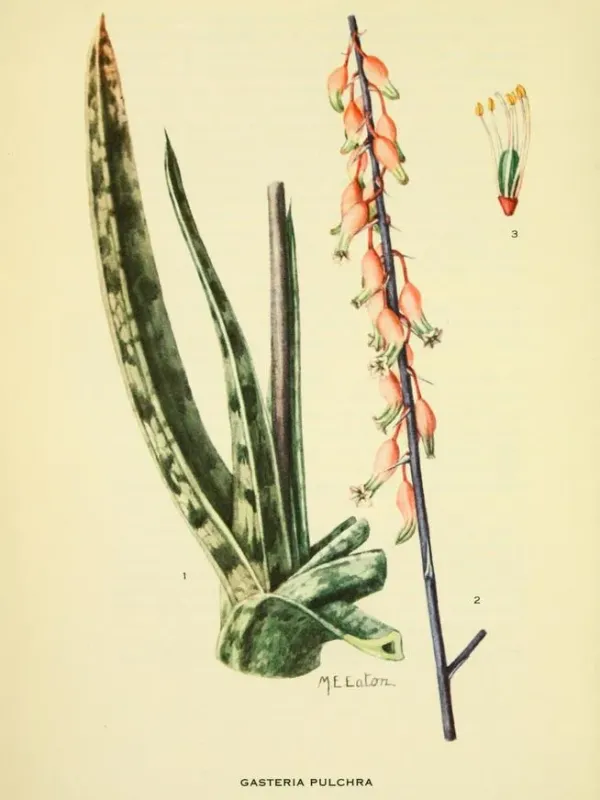
Description
Growing requirements
Gasteria pulchra is a perennial succulent plant belonging to the Asphodelaceae family. It is native to the Cape Province of South Africa, where it has evolved to thrive in rocky environments and regions with limited precipitation, making it a highly adaptive species for dry conditions.
The cultivation of Gasteria pulchra requires bright, indirect light. While these plants can tolerate some direct morning sun, intense midday exposure must be avoided to prevent leaf scorch. Proper air circulation is essential to maintain the health and vigor of the thick, fleshy leaves.
Soil requirements are strict: the medium must provide excellent drainage to avoid water stagnation. A mix composed of potting soil, coarse sand, and perlite is ideal. It is highly recommended to include a thick layer of grit or clay pebbles at the bottom of the pot.
Regarding climate, the plant prefers temperatures between +20 and +25 degrees Celsius during the growing season. During the winter dormancy phase, it is crucial to keep the plant in a cool environment (approximately +12–15 degrees) while minimizing irrigation to prevent etiolation.
Watering should be performed only when the substrate is completely dry to the touch. Gasteria pulchra is highly susceptible to root rot if the soil remains damp for extended periods. In winter, watering should be reduced drastically to mimic the plant's natural dormant cycle.
Main diseases and pests
Mealybugs are the most common pests affecting this species. These insects typically hide in the crevices between leaves and at the base of the plant. If an infestation occurs, it should be treated immediately with appropriate systemic insecticides to prevent spreading.
Spider mites can also become a nuisance, particularly in environments with low humidity. Regular inspection of the undersides of the leaves and maintaining a clean, dust-free environment are key preventive measures against these small pests.
Root rot, driven by excessive moisture and poor soil drainage, represents the primary threat to the plant's health. Once the roots are compromised, the plant may lose its turgor, requiring immediate repotting into fresh, dry, and well-aerated soil.
Fungal leaf spot diseases can occur if water sits on the leaves or if there is excessive humidity without proper ventilation. Ensuring that the foliage remains dry during watering sessions is a fundamental practice in preventing such conditions.
Overall plant maintenance requires a proactive approach. Regular monitoring for signs of distress, such as leaf discoloration or softening, allows for early intervention, ensuring that the Gasteria remains healthy and displays its characteristic structural form.