
Gasteria hybrids
Gasteria hybrids
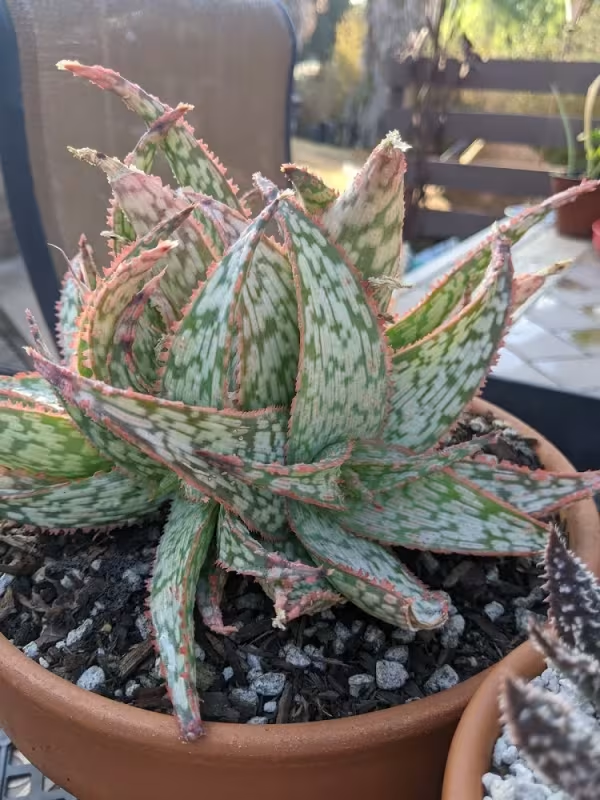
Description
Sowing dates
Gasteria hybrids are ornamental plants belonging to the Asphodelaceae family, widely favored for their resilience. Propagation is typically achieved through vegetative means, such as separating offsets or leaf cuttings, rather than traditional seed sowing, to ensure the preservation of specific hybrid traits.
For seed propagation, a well-draining, sandy-based substrate is essential. Seeds should be sown on the surface and pressed lightly into the soil, maintaining a stable, warm temperature of 20–25 degrees Celsius and high humidity under a transparent cover.
Seedlings develop quite slowly and require careful management of the moisture levels in the substrate. Once they develop several true leaves, they should be transplanted into individual small pots that allow for efficient root development.
In commercial plant production, tissue culture is the preferred method for mass-producing Gasteria hybrids. This process guarantees that the resulting specimens remain true to the parent variety in terms of leaf pattern and growth structure.
When propagating via offsets, it is crucial to allow the cut surfaces of the pups to callus over for several days in a shaded area. This drying period is a vital defense mechanism against soil-borne pathogens during the initial rooting phase.
Growing requirements
Gasteria hybrids thrive in bright, indirect light conditions. While they can tolerate some partial shade, too little light leads to etiolation, characterized by weak, elongated leaves that lose their distinctive markings and firm texture.
A coarse, highly porous soil mix is necessary to prevent waterlogging. A blend comprising potting soil mixed with perlite, pumice, or sharp horticultural sand ensures that the root system has adequate airflow and drainage.
Temperature control is key: these plants prefer a range of 20–25 degrees Celsius during the growing season. A winter dormancy period, with temperatures dropping to about 12–15 degrees, mimics their natural habitat and encourages healthier physiological cycles.
Watering should be performed only when the substrate is completely dry. In the winter months, watering frequency should be reduced significantly to match the plant's metabolic slow-down, preventing the risk of root rot which is common in succulents.
Fertilization should be kept to a minimum, using a low-nitrogen, balanced fertilizer specifically formulated for cacti and succulents. Over-fertilization can result in lush, soft growth that is more susceptible to physical damage and pests.
Main diseases and pests
The most significant threat to Gasteria hybrids is root and crown rot, primarily caused by excessive moisture. If the soil remains saturated for extended periods, the base of the rosette begins to soften and decay, often leading to total plant loss.
Mealybugs are the most persistent pest for these succulents, often nesting deep within the leaf axils where they are protected. Regular monitoring and spot treatments with neem oil or systemic insecticides are recommended for control.
Spider mites can become an issue in environments with very low humidity and poor ventilation. They cause fine webbing and discoloration, which detracts from the plant's appearance and overall vitality if not managed early.
Proper hygiene is the best preventive measure against diseases. Using sterilized tools for grooming and ensuring that no water remains trapped in the center of the leaf rosette significantly reduces the likelihood of fungal infections.
If a plant becomes infested with pests or affected by fungal rot, isolation is necessary to protect the rest of the collection. Careful removal of all infected tissue, followed by a repotting in fresh, clean medium, is often required for recovery.