
Gasteria maculata
Gasteria maculata
Description
Growing requirements
Gasteria maculata is a perennial succulent plant belonging to the Asphodelaceae family. It originates from the rocky regions of South Africa, where it has evolved to thrive in nutrient-poor soils with limited water availability.
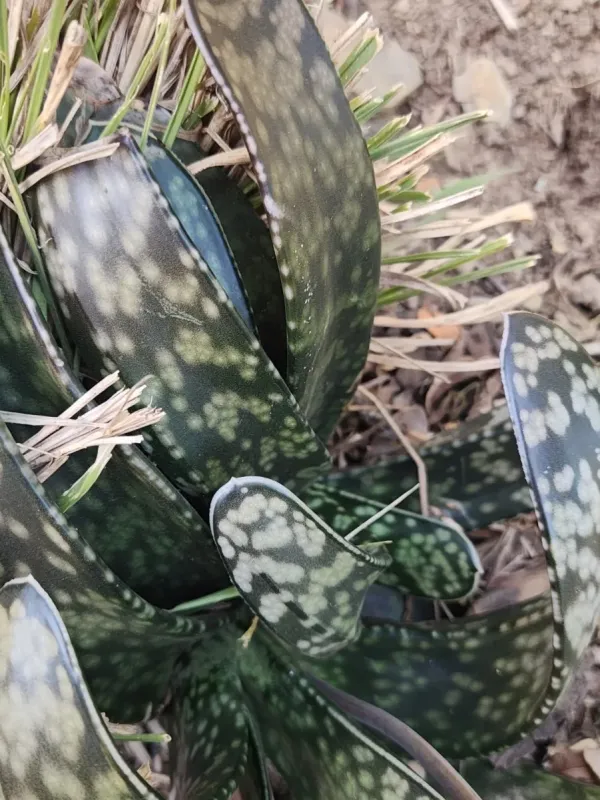
The plant is distinguished by its fleshy, tongue-shaped leaves marked with irregular white spots. These leaves form a distichous arrangement when young, eventually developing into a rosette pattern as the plant matures.
In terms of environmental requirements, this species prefers bright, indirect sunlight. Exposure to harsh, direct sunlight during the peak of summer can cause the leaves to lose their vivid color and develop necrotic spots.
The substrate must be highly porous and well-draining. A typical potting mix for cacti and succulents, enriched with pumice or perlite, ensures that the roots do not sit in stagnant water, which is crucial for survival.
Temperature management is vital; during the growing season, a range of 20°C to 25°C is ideal. A winter dormancy period with cooler temperatures around 12°C to 15°C helps the plant prepare for the next flowering cycle.
Main diseases and pests
Root rot is the most significant threat to Gasteria maculata. It is almost exclusively caused by overwatering or using a heavy, non-porous soil medium that retains moisture for too long.
Mealybugs are common pests that tend to hide in the crevices of the leaf rosettes. If detected, they should be removed mechanically or treated with appropriate systemic insecticides to prevent damage to the plant tissue.
Spider mites can also become a problem in low-humidity environments. Regularly wiping the leaves with a damp cloth can help deter these pests and keep the plant healthy and clean.
Fungal infections may appear if the plant is kept in poor ventilation conditions. Improving airflow and avoiding overhead watering are essential preventative strategies for maintaining a disease-free collection.
By monitoring the plant for any signs of yellowing or soft spots, growers can address health issues early and prevent the spread of decay, ensuring the longevity of the specimen.