
Gasteria bicolor
Gasteria bicolor
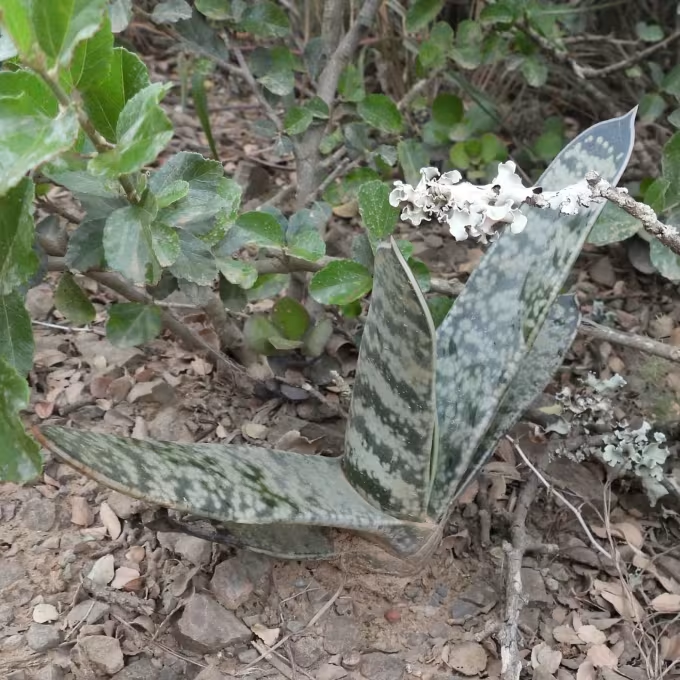
Description
Sowing dates
Propagation of Gasteria bicolor is achieved primarily through seeds or by separating the offsets that naturally sprout around the mother plant.
Seeds should be sown in a well-draining, sandy substrate during the spring, maintaining a consistent temperature of around 22 degrees Celsius.
Seedlings require a careful irrigation routine to keep the soil slightly moist until the plants reach a size sufficient for individual potting.
Vegetative propagation using offsets is preferred by many growers because it ensures the preservation of the plant's unique phenotypic characteristics.
When removing offsets, it is critical to allow the cut surface to callous for a day or two before planting to prevent rot at the base.
Growing requirements
This species belongs to the Asphodelaceae family and is native to the Eastern Cape region of South Africa, adapted to arid and rocky environments.
It thrives in bright, indirect light; direct sunlight in hot climates can cause the succulent leaves to scorch or develop brown, discolored patches.
A specialized potting mix for succulents, characterized by high porosity and inorganic content, is essential to facilitate oxygen access to the roots.
During the active growth season, water should be applied only when the substrate has dried out completely throughout the container.
Temperature fluctuations are generally tolerated, but frost must be avoided at all costs to prevent cellular collapse in the succulent tissues.
Main diseases and pests
Root rot is the most significant threat to the survival of the plant, usually caused by overwatering or the use of poorly draining soil mixtures.
Mealybugs are common pests that colonize the gaps between the tightly packed leaves, draining the sap and weakening the overall plant structure.
Spider mites may infest the plant during periods of prolonged low humidity, leading to a stippled, sickly appearance of the succulent foliage.
Fungal infections can manifest as dark, soft spots on the leaves, which necessitate pruning affected areas and adjusting the microclimate conditions.
- Implementing strict watering cycles.
- Providing adequate ventilation to prevent fungus.
- Using appropriate miticides for mite outbreaks.