
Frailea schilinzkyana
Frailea schilinzkyana
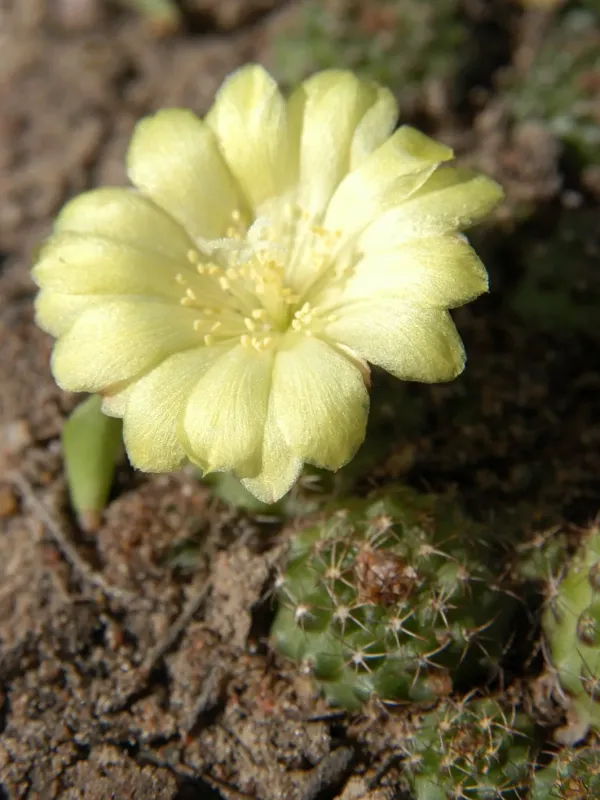
Description
Sowing dates
Sowing seeds of Frailea schilinzkyana is best done in the spring when the growing season begins. The optimal temperature for successful germination is between 22 and 25 degrees Celsius.
Use a well-draining, sandy soil mix specifically designed for cacti. Seeds should be placed on the surface of the moist substrate and barely covered with fine sand.
The container must be kept covered with glass or clear plastic to maintain high humidity levels. It is crucial to monitor for mold growth and provide ventilation daily.
Seedlings need consistent moisture during their first few weeks. As they grow, you can gradually reduce the frequency of misting to encourage root development.
Transplanting (pricking out) should occur when the seedlings are about a year old. By this age, they are resilient enough to be moved into individual small pots.
Growing requirements
Frailea schilinzkyana is a member of the Cactaceae family, native to the arid regions of Paraguay and southern Brazil. It is highly valued by collectors for its compact size.
This plant thrives in bright, filtered light. While it is a desert plant, intense midday sun can cause scorching, so providing partial shade during the summer is recommended.
The soil must be slightly acidic and exceptionally porous. Adding pumice or perlite to the commercial cactus mix will prevent water stagnation, which is vital for this species.
Watering should be done sparingly, allowing the soil to dry out completely between waterings. During winter, the plant requires a cool, dry dormant period to bloom properly.
A distinctive botanical feature is cleistogamy. The flowers often remain closed while the plant produces seeds, making it an excellent species for indoor propagation.
Main diseases and pests
Spider mites are the most common pests that thrive in dry environments. If left untreated, they can damage the epidermis of the plant and cause visible scarring.
Root rot is the primary cause of plant death, usually resulting from overwatering or poorly drained soil. If the stem becomes soft, immediate action is required to save it.
Mealybugs can often be found hiding in the ribs or near the base of the plant. Using a systemic insecticide or manual removal with alcohol is effective for control.
Preventative measures include maintaining good airflow and inspecting the cacti regularly. Keeping the collection free of dead organic matter reduces the risk of fungal infections.
Healthy plants are the best defense against threats. Providing consistent environmental conditions ensures that the Frailea remains strong and resistant to common pests.