
Frailea curvispina
Frailea curvispina
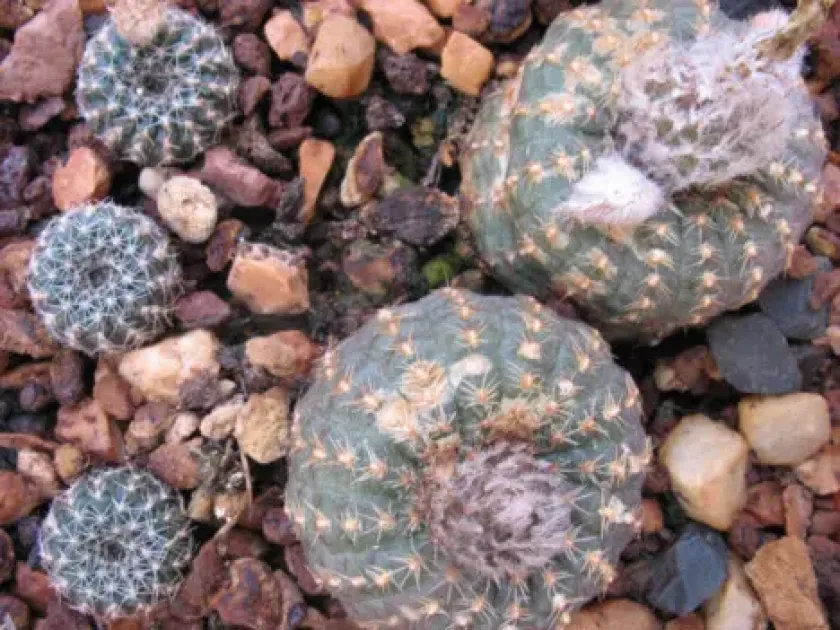
Description
Sowing dates
Sowing of Frailea curvispina seeds is carried out in the spring period when air temperature remains consistently above 20 degrees Celsius. It is important to use fresh seeds, as they quickly lose viability, which is a biological characteristic of this genus.
For sowing, use shallow trays with drainage holes filled with a mixture of turf soil, sand, and fine gravel. The substrate must be sterile to avoid the development of mold fungi, which are lethal to young seedlings.
Seeds are sown on the surface and pressed slightly into the soil, then covered with glass or film to create a greenhouse effect. Humidity inside the container must be maintained at a high level until the first true spines appear.
Pricking out the seedlings is performed when they reach the size of a pea, carefully transplanting them into individual pots. This process requires caution, as the root system of the plant is extremely sensitive to mechanical damage.
Young specimens require regular misting and protection from direct sunlight until the adult appearance is fully formed, which usually happens by the second or third year of life.
Growing requirements
Frailea curvispina belongs to the Cactaceae family and naturally grows on arid rocky slopes in South America. The plant prefers bright but diffused light, which allows the stem to acquire its characteristic coloration and spine density.
For successful growth, a light, well-drained substrate with low acidity is required. It is recommended to add perlite or vermiculite to ensure root aeration, as water stagnation is the main cause of culture failure.
The temperature range during the active growing season should be between 22 and 28 degrees Celsius. In winter, the plant requires a dormant period at reduced temperatures of 10–12 degrees, which facilitates flower bud formation.
Watering should be moderate and performed only after the soil ball has completely dried out. Excessive moisture combined with cool air provokes the development of root rot.
The plant adapts well to dry indoor air, making it a popular object for cultivation in closed conservatories and home succulent collections.
Main diseases and pests
The main enemy of the culture is the spider mite, which attacks the stem during hot and dry weather. Systemic acaricides applied according to the instructions are used to control it.
Root mealybugs often hide in the substrate, sucking juices from the underground part of the cactus. Regular root inspection during repotting and the use of insecticides minimize the risk of damage.
Overwatering inevitably leads to rot processes. If soft dark spots appear on the cactus body, it is necessary to immediately remove the affected tissues and treat the cut with a fungicide.
Fungal infections, such as fusarium, can develop under poor ventilation. Prevention consists of airing the growing area and strictly following the watering schedule.
Improper overwintering accompanied by excess moisture leads to stem etiolation and the loss of the plant's decorative qualities, making it more susceptible to any pathogens.