
Frailea buenekeri
Frailea buenekeri
Description
Growing requirements
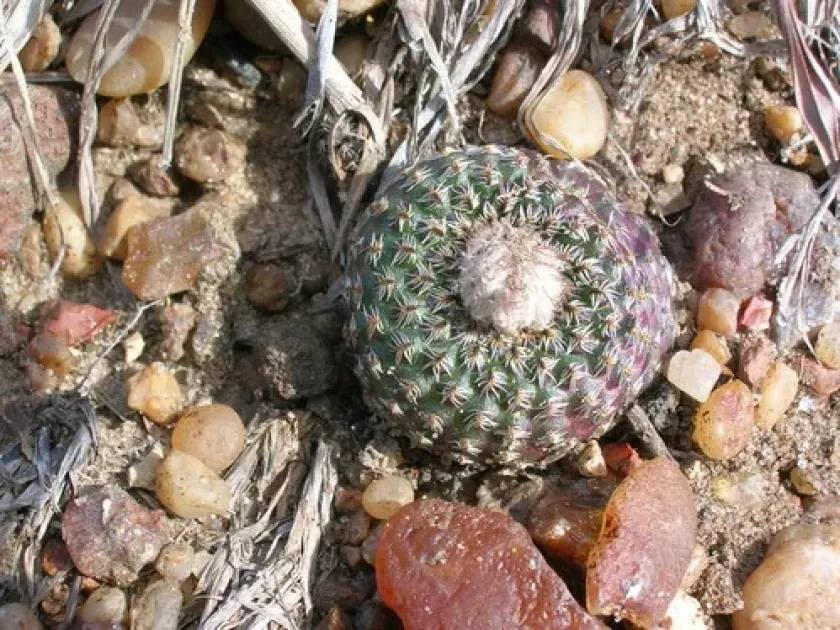
Frailea buenekeri is a tiny, globular cactus species that belongs to the Cactaceae family. It is native to a limited habitat in the Rio Grande do Sul region of Brazil, where it thrives in rocky, well-drained crevices.
The plant is known for its slow growth rate and modest size. Botanically, it is classified as a cleistogamous species, meaning it can produce fertile seeds within closed buds, ensuring self-propagation without the need for cross-pollination.
Successful cultivation requires a highly porous and mineral-based substrate. A mixture of pumice, perlite, and a small amount of sandy loam is ideal to prevent root asphyxiation and moisture-related damage.
Environmental requirements include bright light exposure, though protection from intense mid-day heat is recommended to avoid epidermis burns. During the dormant winter season, the plant must be kept dry and in a cool, well-ventilated area.
The horticultural use of Frailea buenekeri is primarily focused on specialized succulent collections. Due to its short lifespan in cultivation compared to larger cacti, growers often rotate the plant population through regular seed propagation.
Main diseases and pests
The most significant threats to this species are root mealybugs, which are difficult to detect, and spider mites that target the epidermis during dry spells. Overwatering is the primary cause of fungal infections leading to root rot.