
Alaska willow
Salix alaxensis (Andersson) Coville
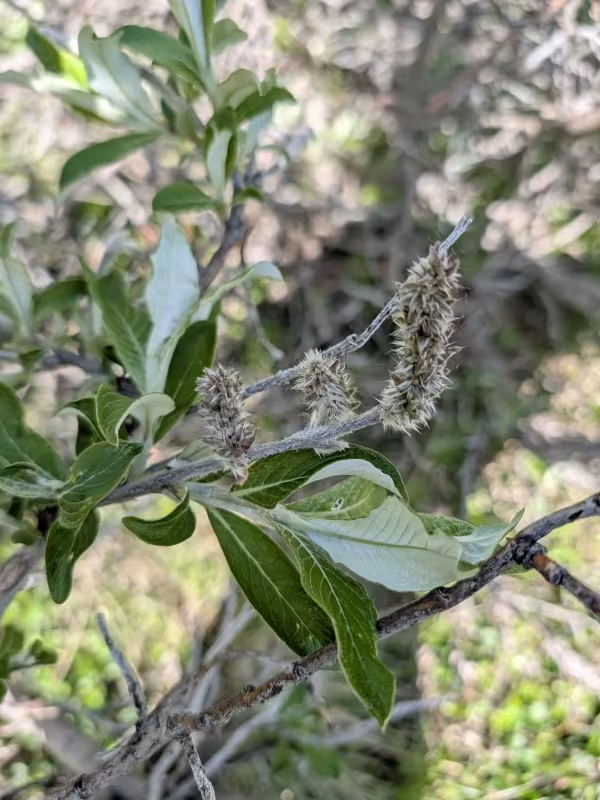
Description
Growing requirements
The Alaska willow (Salix alaxensis) is a deciduous shrub or small tree belonging to the Salicaceae family. It is renowned for its remarkable ability to thrive in extreme subarctic environments, demonstrating unique physiological adaptations to harsh conditions.
Its natural range extends across Alaska, Northwestern Canada, and the Russian Far East. The plant typically populates riverbanks, alluvial plains, and mountain slopes, where it benefits from high moisture levels and mineral-rich sandy or gravelly soils.
Climate-wise, this species is exceptionally frost-hardy and wind-resistant. It prefers open, sunny locations as it does not compete well in shaded areas. Its powerful root system is perfectly suited to stabilize volatile substrates and prevent erosion in riverine ecosystems.
Regarding soil requirements, the Alaska willow favors well-drained, nutrient-rich soils that provide consistent water supply. While it is a water-loving plant, it requires aeration in the root zone to avoid decay, which makes alluvial deposits its preferred habitat.
In terms of cultivation, propagation is most successful through hardwood cuttings taken during the dormant season. Ensuring consistent soil moisture in the first year after planting is essential for establishing a robust root system before the onset of winter.
Yield
The primary agricultural and environmental use of the Alaska willow is land restoration and stabilization of riverbanks. Its rapid biomass production makes it an excellent candidate for shelterbelts in northern, wind-swept areas.
Commercially, the flexible branches are utilized for basketry and the production of rustic artisanal goods. The wood is lightweight yet durable, which has historically been utilized by indigenous populations for various household tools.
The species serves as a vital early-season pollen source for bees, significantly supporting local pollinator populations in environments with a limited floral calendar. Its aesthetic value is also recognized in landscape design due to the silvery, felt-like hairs on its foliage.
As a phytoremediation tool, the Alaska willow is capable of extracting heavy metals from contaminated riparian zones, assisting in the ecological cleanup of disturbed industrial sites or mine tailings.
Its potential as a source of biomass energy in cold regions is currently being explored. The fast growth rate allows for harvesting cycles that can provide sustainable fuel or fiber for local communities.
Main diseases and pests
The Alaska willow is primarily susceptible to fungal diseases such as leaf rust and various spots, which typically flourish under conditions of excessive humidity. Improving airflow through regular pruning is a standard preventative maintenance practice.
Insect pests, including willow leaf beetles and various gall midges, can cause significant cosmetic and physiological damage. Targeted application of eco-friendly insecticides is recommended during the early stage of an infestation to minimize harm.
Stem-boring insects may pose a risk to mature trees, especially if the bark has been mechanically damaged. Keeping the tree healthy through proper hydration and nutrition is the best defense against these internal pests.
Excessive nitrogen fertilization should be avoided, as it encourages soft, succulent growth that is disproportionately attractive to sucking insects like aphids and mites. Balanced mineral nutrition keeps the cell walls strong and resistant.
Early-season scouting is crucial for effective pest management. By monitoring for signs of stress or leaf discoloration in the spring, growers can implement cultural controls that prevent larger outbreaks during the summer months.