
Zambezi pineapple lily
Eucomis zambesiaca
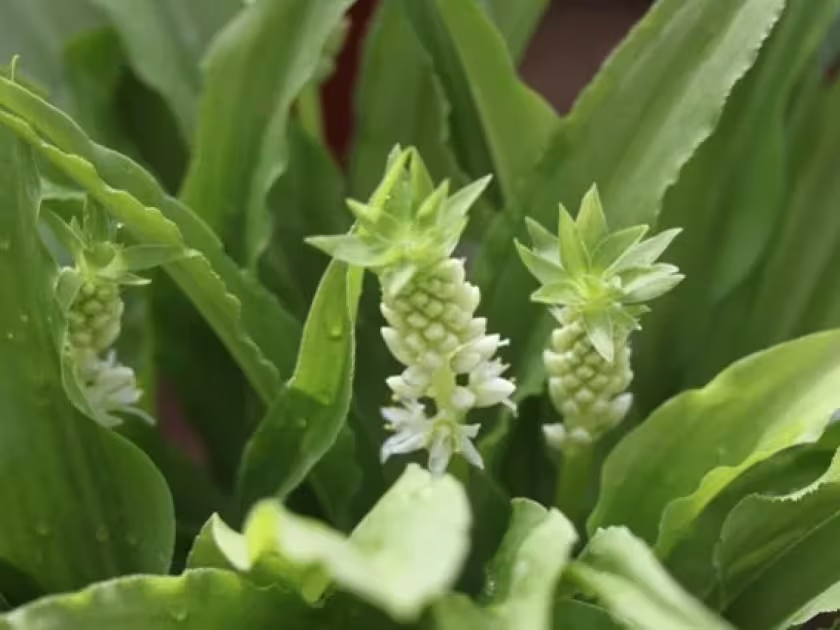
Description
Growing requirements
The Zambezi pineapple lily (Eucomis zambesiaca) is a bulbous perennial belonging to the Asparagaceae family. Native to the southern regions of Africa, this species thrives in mountainous grasslands and moist, well-draining soil habitats.
Botanically, it is defined by its basal rosette of lanceolate, bright green leaves and a central, sturdy scape. The inflorescence consists of a dense raceme of small flowers, topped by a distinctive cluster of bracts, which provides its common name reference.
For successful cultivation, the plant requires full sun to light shade and protection from harsh weather conditions. The soil must be rich in organic matter, loose, and possess excellent drainage capabilities to prevent the succulent bulb from rotting.
During the growing season, consistent moisture is vital. However, during the winter dormancy period, the bulbs must be kept relatively dry and cool, especially in climates where frost is a possibility during the colder months.
This crop is highly valued for its ornamental appeal in landscaping, borders, and as a container plant. It is also increasingly used in the floral industry for its unique, long-lasting blooms and structural elegance in floral arrangements.
Main diseases and pests
The primary threat to the health of Eucomis zambesiaca is root rot caused by improper watering regimes. If the soil remains waterlogged for extended periods, the bulb will quickly decline, leading to total plant failure.
Common insect pests include aphids, which often infest the flower spikes during warm and humid weather. Regular monitoring and the application of mild insecticidal soaps are typically sufficient to manage these infestations effectively.
Spider mites can become a problem, particularly in dry indoor environments or greenhouses. They cause stippling on the leaves and can lead to premature leaf drop if the infestation is allowed to progress unchecked.
Slugs and snails frequently target the succulent emerging foliage during the spring. Implementing physical barriers or using pet-safe bait around the garden beds is an effective way to minimize damage during the early growth phase.
Viral infections may occasionally manifest as mosaic-like patterns or stunted growth. To prevent the spread of viruses, it is essential to control insect vectors and ensure that all tools used for division or pruning are properly disinfected.