
Eucomis autumnalis
Eucomis autumnalis
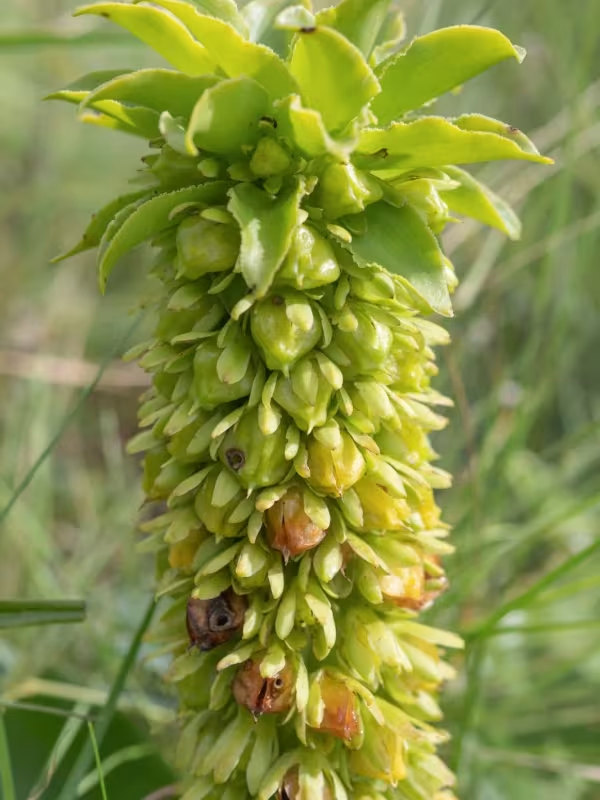
Description
Sowing dates
Planting Eucomis autumnalis outdoors should occur in late spring once the danger of frost has passed and soil temperatures have reached at least 15°C for optimal root development.
Bulbs are typically planted at a depth of 10 to 15 centimeters, spacing them 30 to 40 centimeters apart to ensure adequate airflow and room for the developing foliage.
For gardeners in cooler regions, starting the bulbs in pots indoors during early spring is recommended to ensure a longer growing season and earlier blooming.
Seed propagation is possible by sowing in well-draining soil mixtures under glass, requiring bottom heat and consistent moisture to stimulate the germination process.
The transition from indoor pots to outdoor beds should be gradual, allowing the plants to acclimatize to environmental conditions over several days.
Growing requirements
Eucomis autumnalis, a member of the Asparagaceae family, is a stunning bulbous perennial native to the southern regions of Africa, known for its unique pineapple-shaped flower spikes.
The plant thrives in full sun but prefers some light shade during the hottest part of the afternoon in regions with extremely high temperatures.
Well-drained, fertile soil is a critical requirement, as the bulb is highly susceptible to rot if subjected to waterlogged conditions for extended periods.
Watering should be consistent throughout the active growing season, but must be reduced significantly as the foliage begins to yellow in preparation for winter dormancy.
Balanced fertilizer application is beneficial during the early growth stages, helping the plant build the necessary energy reserves for the following season.
Main diseases and pests
The most significant threat to Eucomis is soil-borne fungal pathogens which manifest as root or bulb rot when drainage is insufficient or irrigation is excessive.
Slugs and snails are major pests that often feed on the tender young leaves, potentially causing severe aesthetic damage and weakening the plant's overall vigor.
Aphids and spider mites may occasionally infest the plant, particularly in dry environments or during periods of heat stress, requiring prompt pest management intervention.
Maintaining a clean garden bed and removing weeds reduces competition and minimizes habitats for pests that target these bulbous species.
Preventive measures include dusting bulbs with a fungicide before planting and ensuring that the soil structure is light and porous to discourage pathogen growth.
Harvesting
The harvest or lifting of the bulbs should be performed in autumn after the leaves have naturally turned yellow and withered, indicating the end of the metabolic cycle.
Bulbs should be lifted carefully to avoid mechanical injury, brushed clean of soil, and left to dry in a shaded, well-ventilated location for several days before storage.
Stored bulbs need to be kept in a cool, dry place with peat or sand, ensuring that the temperature remains consistently above freezing to prevent cellular damage.
In temperate climates, the bulbs may be left in the ground if the site is heavily mulched; however, this is risky in areas prone to severe or prolonged ground freezing.
Seeds are harvested once the seed pods turn brown and dry on the stem, then stored in cool, dark environments to maintain viability for the subsequent season.