
Eucomis amaryllidifolia
Eucomis amaryllidifolia
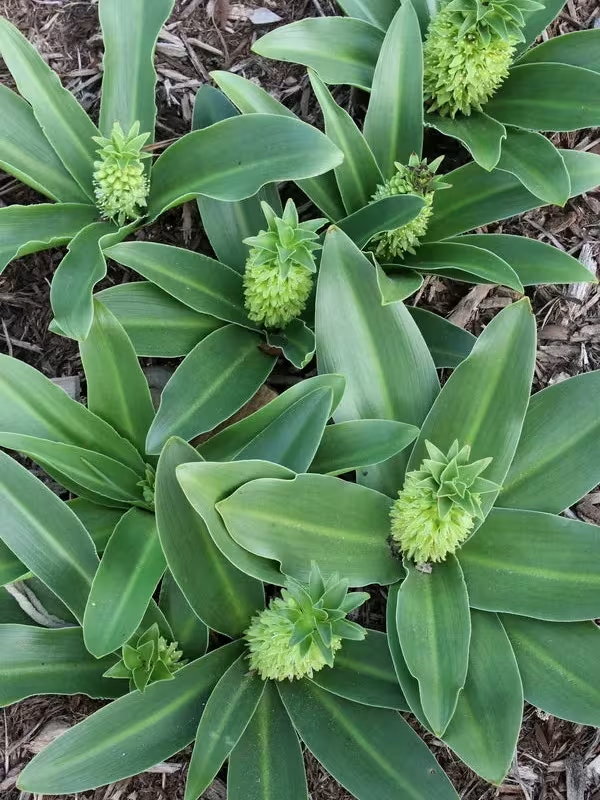
Description
Sowing dates
Planting of Eucomis amaryllidifolia bulbs should occur in the spring, once all danger of frost has passed and the soil has reached a stable warm temperature.
For container-grown specimens, bulbs can be started indoors during late winter, provided they receive sufficient light to prevent etiolation of the foliage.
The bulb should be planted at a shallow depth, with the neck just at or slightly below the soil surface to ensure structural stability for the emerging flower spike.
It is standard practice to use a well-draining soil mix in containers to avoid the risk of bulb rot before the roots have fully established.
Spacing should be calculated based on the size of the bulb, with at least 25 centimeters of clearance recommended to allow the foliage to expand fully.
Growing requirements
Eucomis amaryllidifolia is a perennial member of the Asparagaceae family, known for its distinct rosette of leaves and a pineapple-like inflorescence.
This species requires a site with full sun exposure and fertile, sandy-loam soil that allows for quick drainage after irrigation or rainfall.
Watering management is crucial; the soil should be kept consistently moist during the summer growth phase but kept dry throughout the winter dormancy period.
Fertilization with a balanced, water-soluble fertilizer during the peak growing season will support the development of the dense raceme of flowers.
The plant thrives in regions where the climate mimics its native South African habitat, characterized by warm, bright summers and a distinct dry rest period.
Main diseases and pests
Slugs and snails are the most prominent pests, often targeting the succulent foliage and young flower stalks during damp weather conditions.
Rotting is the most significant disease threat, typically caused by fungi such as Pythium or Phytophthora when bulbs are kept in waterlogged soil.
Poor ventilation around the leaves can encourage the development of fungal leaf spots, which detract from the aesthetic value of the ornamental foliage.
Management of these threats involves keeping the area clear of debris and ensuring that the soil drainage is functioning optimally throughout the year.
Careful inspection of bulbs before storage is essential, ensuring that no signs of decay or mite infestation are present before they enter dormancy.