
Eucomis bicolor
Eucomis bicolor
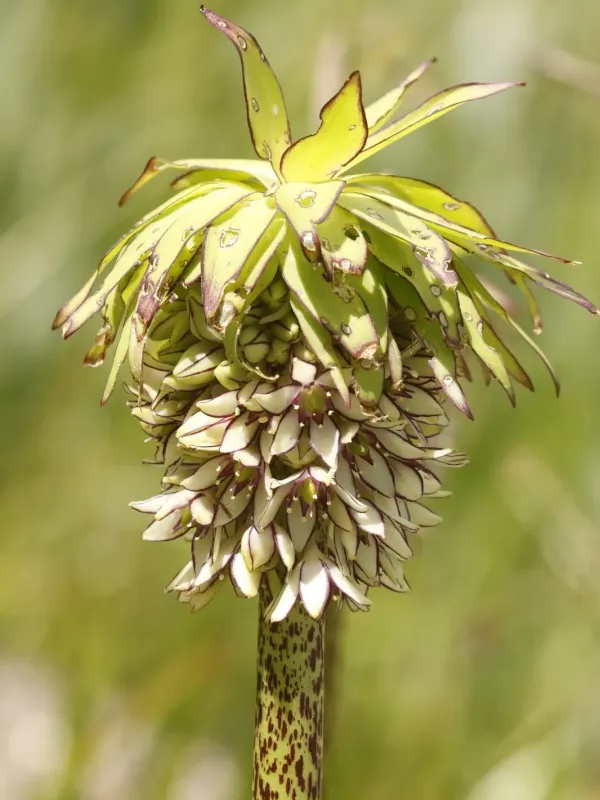
Description
Sowing dates
Planting Eucomis bicolor bulbs in open ground should be carried out in late spring once all risks of frost have passed and the soil has warmed up significantly. This usually corresponds to late May in temperate regions.
For earlier blooms, gardeners often start the bulbs in pots indoors during March or April. Moving established plants into the garden later in the season ensures a more spectacular and prolonged flowering period.
The bulbs should be planted at a depth of about 10 to 15 centimeters. Ensure the drainage at the bottom of the planting hole is sufficient, especially if the soil is heavy or tends to retain moisture.
Spacing is essential for the plant's health; allow at least 20 to 30 centimeters between bulbs. This prevents crowding and ensures that each rosette of leaves has adequate access to sunlight and air circulation.
Propagation by seeds is possible but requires a greenhouse environment and a long cultivation period. Most amateur and professional gardeners prefer propagation through offsets, which occur naturally on the mother bulb.
Growing requirements
Eucomis bicolor, commonly known as the pineapple lily, belongs to the Asparagaceae family. Native to South Africa, it thrives in warm, sunny spots that receive plenty of light throughout the day.
The soil must be fertile, rich in organic matter, and exceptionally well-drained. Sandy loam amended with well-rotted compost provides the ideal conditions for robust root growth and bulb health.
Regular watering is necessary during the active growth phase, particularly during the peak of summer. However, the soil must never be waterlogged, as stagnant moisture is the primary enemy of this species.
To promote vibrant growth and large inflorescences, apply a balanced liquid fertilizer every two weeks during the summer. Focus on potassium-rich fertilizers as the flower spikes begin to emerge.
In regions where winter temperatures drop below freezing, the bulbs must be lifted and stored indoors. Eucomis cannot survive damp, freezing soil, which inevitably leads to bulb rot during the dormant season.
Main diseases and pests
The most significant threat to Eucomis bicolor is bulb rot, which is often caused by poor drainage or overwatering. Once a bulb starts to decay, it is often difficult to save the plant.
Slugs and snails are the most common pests, as they are attracted to the broad, succulent foliage. Using copper barriers or organic slug pellets around the plants helps prevent foliage damage.
Powdery mildew may occur if air circulation is insufficient or if the foliage remains wet for extended periods. Pruning affected leaves and ensuring adequate spacing will help mitigate this fungal issue.
Aphids can occasionally cluster on the flower spikes, draining sap and attracting sooty mold. Applying insecticidal soap or a gentle spray of water can effectively manage these populations.
If viral infections are detected, indicated by mottled leaves or stunted growth, the plant should be removed and disposed of immediately to prevent further spread within the garden.
Harvesting
Harvesting bulbs for winter storage should be done in autumn, immediately after the leaves begin to yellow. This indicates that the plant has finished its growth cycle and stored energy for the next season.
Carefully dig out the bulbs, taking care not to nick the skin, as wounds are entry points for pathogens. Shake off excess soil and remove dead foliage, leaving a short neck above the bulb.
Curing is a critical step before storage. Allow the bulbs to dry in a shaded, airy, and dry location for several days until the outer layers are firm and moisture-free.
Store the dried bulbs in a cool, dark, and frost-free environment. Using containers filled with dry peat or sand helps regulate humidity levels around the bulbs throughout the winter dormancy.
Frequent monitoring during the winter months is essential. Discard any bulbs that show signs of softness or mold to ensure that the rest of the collection remains healthy for the upcoming planting season.