
Eucomis pallidiflora
Eucomis pallidiflora
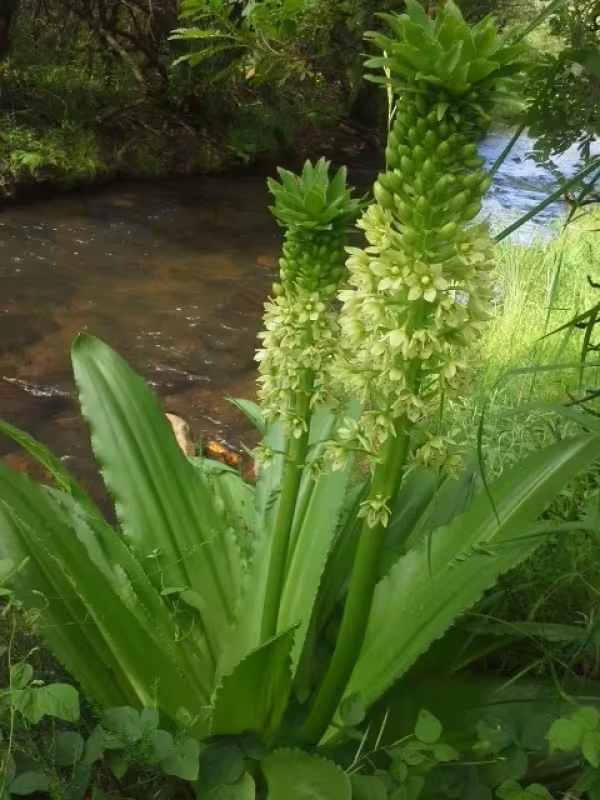
Description
Sowing dates
Planting Eucomis pallidiflora bulbs in open soil should occur during mid-to-late spring after the danger of frost has passed and soil temperatures have risen.
The bulbs should be placed at a depth of approximately 10 to 15 centimeters, ensuring the soil is loose enough to facilitate root expansion.
For container gardening, use a well-draining potting mix and ensure the container has sufficient drainage holes to prevent water retention at the base.
During the initial growth stage, maintain a moderate level of soil moisture to encourage the development of strong, healthy roots.
In colder regions, bulbs must be lifted from the ground in autumn after the foliage begins to wither, then stored in a cool, dry place throughout winter.
Growing requirements
Eucomis pallidiflora, a member of the Asparagaceae family, is a distinctive bulbous perennial native to the subtropical regions of Southern Africa.
The plant thrives in full sun exposure, which is critical for the development of its large, pale green or greenish-white flower spikes.
Soil composition must be rich in organic matter and possess excellent drainage capabilities to ensure the longevity of the bulbs over several seasons.
Watering requirements are highest during the active growing season, though the soil should remain moist rather than saturated to avoid bulb decay.
While tolerant of various soil types, this species performs best when provided with nutrient-rich compost and a balanced fertilizer application during the onset of growth.
Main diseases and pests
The primary threats to this culture are fungal pathogens, specifically those causing basal and bulb rot under conditions of poor soil aeration.
Excessive humidity combined with high temperatures can promote the rapid spread of botrytis, which manifests as lesions on the leaves and stems.
Insect pests, such as aphids and thrips, frequently colonize the dense inflorescences, necessitating timely intervention with insecticidal soaps or systemic treatments.
Slugs and snails present a seasonal risk, especially during periods of heavy rainfall, and may require the use of physical barriers or targeted molluscicides.
Regular monitoring of the foliage and stems for signs of discoloration or wilting is essential for early identification and control of potential disease outbreaks.