
Williams heath
Erica x williamsii Druce
Description
Growing requirements
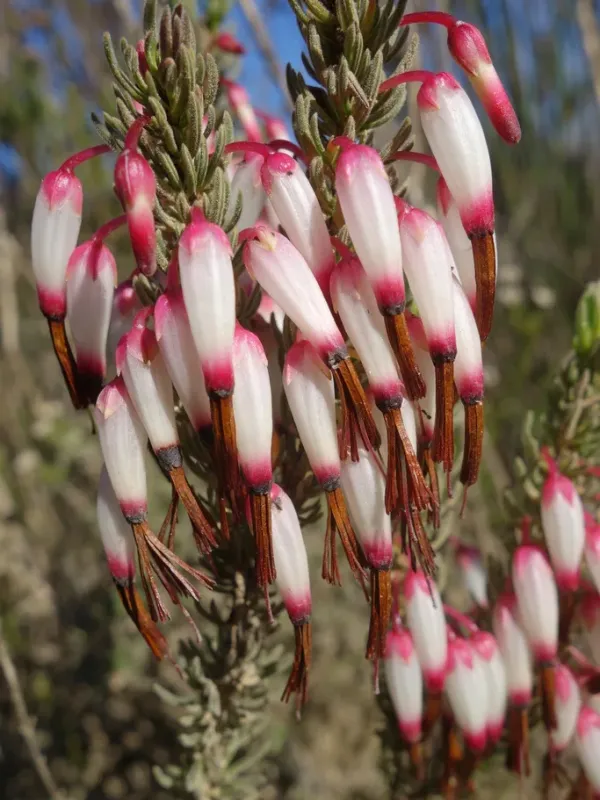
Williams heath (Erica x williamsii) is a distinct hybrid between Erica cinerea and Erica tetralix, belonging to the Ericaceae family. This evergreen shrub is prized in ornamental horticulture for its compact growth habit and elegant, bell-shaped flowers.
This species thrives in locations with full sun to partial shade, where air movement is consistent. It is best suited for rock gardens, heather beds, or borders that offer sharp drainage and protection from harsh, drying winds.
The soil must be acidic (pH 4.5–5.5) and rich in organic matter. Gardeners should incorporate horticultural sand, peat, and pine bark to ensure a loose, airy structure that prevents water from accumulating around the sensitive root system.
Regular maintenance involves shallow watering during dry spells and consistent mulching. Mulch helps maintain the cool, moist conditions that this plant requires while suppressing competitive weed growth in the immediate vicinity.
Pruning is essential to maintain the shape and vigor of the plant. It should be performed immediately after the flowering period to encourage dense branching and prevent the center of the shrub from becoming woody and sparse over time.
Main diseases and pests
The primary threats to Erica x williamsii are fungal pathogens, specifically Phytophthora root rot. This disease is favored by poor drainage and waterlogged soil, which causes rapid decline and death of the plant.
Botrytis cinerea, commonly known as gray mold, is another significant issue during cool, wet seasons. It attacks the foliage and shoots, leaving fuzzy gray patches that weaken the plant's structural integrity.
Pests such as spider mites can infest the foliage, particularly in hot and dry climates. They cause discoloration and stippling on the leaves, which significantly reduces the plant's overall aesthetic appeal and vitality.
Preventative cultural practices remain the most effective defense. This includes avoiding overhead watering and ensuring that the plants are spaced far enough apart to allow for proper airflow through the canopy.
In cases of infestation, use specialized fungicides or horticultural oils compatible with Ericaceous plants. Always test products on a small area first to ensure no phytotoxic reaction occurs on the delicate evergreen foliage.