
Stuart's heath
Erica x stuartii E. F. Linton
Description
Growing requirements
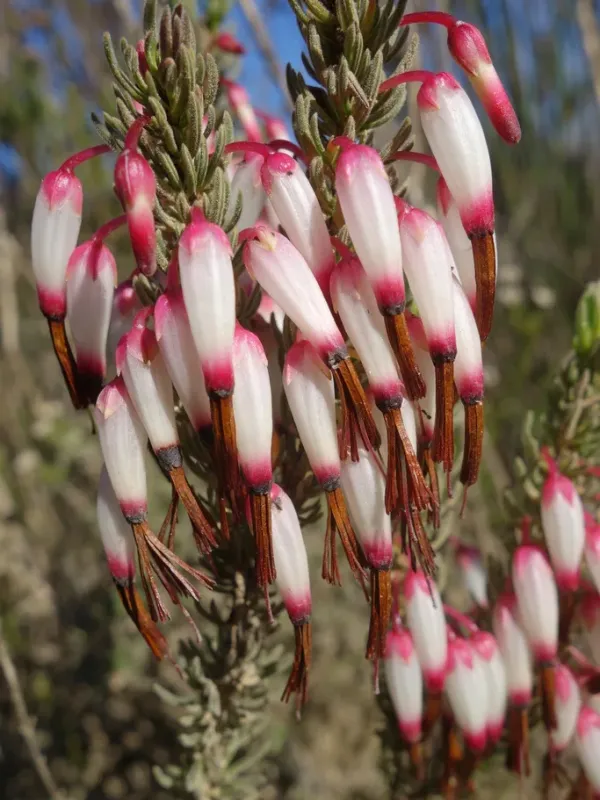
Stuart's heath (Erica x stuartii) is a distinct hybrid belonging to the Ericaceae family. It is a compact, evergreen shrub known for its ornamental foliage and delicate bell-shaped flowers, making it a popular choice for rock gardens and peat beds.
Originating primarily from regions in Ireland, this plant is well-adapted to maritime climates. It thrives in environments with high humidity and moderate temperatures, avoiding extreme heat or long periods of intense, dry sunlight which can stress the foliage.
The soil requirements are strict: the plant mandates acidic, well-draining substrates rich in organic matter. A mixture of peat, sand, and pine needles is typically recommended to maintain the necessary pH level, which is critical for nutrient uptake in ericaceous plants.
Cultural practices involve maintaining a consistent moisture level in the soil without causing waterlogging. Watering should be done using soft or rainwater, as tap water containing high levels of calcium carbonate can rapidly degrade soil acidity and harm the plant.
Maintenance pruning is essential for plant vigor. It should be performed immediately after the flowering period to encourage dense, bushy growth. This prevents the woody centers from becoming sparse and ensures that the plant remains aesthetically pleasing throughout the year.
Main diseases and pests
Phytophthora root rot is the most serious threat to Stuart's heath, often caused by inadequate soil drainage or excessively humid conditions at the base of the plant. Once established, this fungal infection is difficult to treat, making prevention the best strategy.
Gray mold (Botrytis) can affect the plants during long, rainy seasons, especially if there is poor air circulation. Removing affected parts and applying fungicides suitable for ericaceous plants can help control the spread of the pathogen in garden settings.
Pests such as scale insects may occasionally infest the stems, weakening the shrub by sap extraction. Early detection is key; manual removal or the application of horticultural oils during the dormant season is highly effective in managing these populations.
Spider mites can be a problem during particularly dry summers. Increasing local humidity and ensuring the plant is not under drought stress are effective natural deterrents. If infestation is severe, a targeted application of acaricides may be required.
Finally, winter protection is advised in colder climates. Applying a thick layer of organic mulch around the root zone helps stabilize soil temperature, while light burlap coverings protect the foliage from desiccating winter winds.