
Erica woodii
Erica woodii Bolus
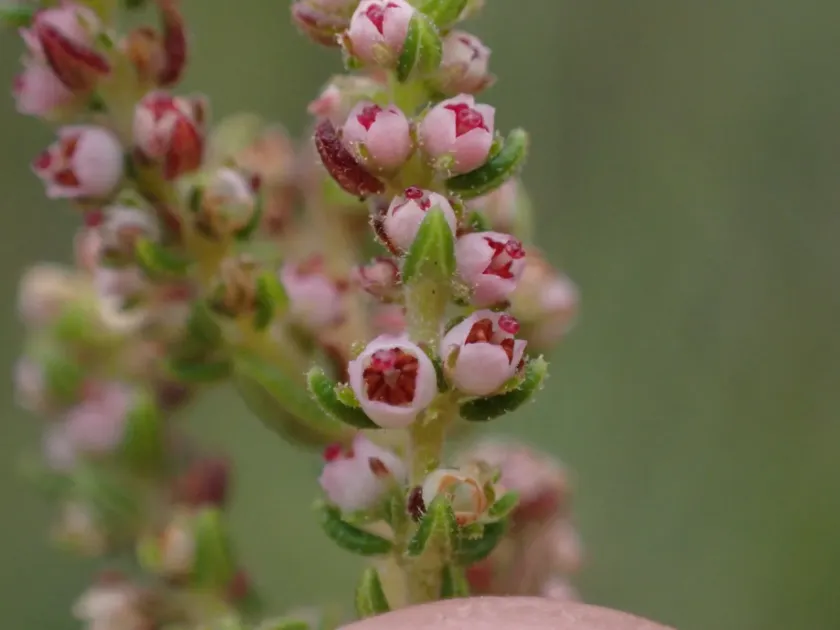
Description
Growing requirements
Erica woodii is a perennial evergreen shrub belonging to the Ericaceae family. Native to the mountainous regions of South Africa, this species has evolved to thrive in nutrient-poor soils and specific alpine climatic conditions.
Success in cultivation requires a strictly acidic substrate with excellent drainage properties. Growers typically use a mix of peat, pine bark, and perlite to replicate the plant's natural growth environment and prevent root asphyxiation.
The plant demands high light exposure for healthy foliage and prolific blooming. However, protection from intense mid-day heat is recommended in warmer climates to avoid scorching the delicate, needle-like leaves and to maintain soil moisture stability.
Watering requirements are specific: Erica woodii is highly sensitive to the mineral content in water. Soft or rainwater is preferred, as high calcium levels can increase pH levels, leading to iron deficiency and subsequent yellowing of the leaves.
In ornamental landscaping, this species is prized for its aesthetic appeal in rock gardens and container gardening. It provides a unique texture and seasonal color, making it a desirable subject for specialized garden displays.
Main diseases and pests
Root rot, primarily caused by Phytophthora species, remains the most significant threat to the plant. This condition is almost always a result of poor drainage or overwatering, necessitating strict adherence to irrigation protocols.
Pest management should focus on monitoring for spider mites and scale insects, which can exploit the plant if it is kept in environments with poor air circulation or excessively dry air.
To prevent disease outbreaks, growers should ensure sufficient spacing between individual plants. Adequate airflow allows the foliage to dry after rain or misting, which significantly lowers the risk of fungal infections.
Pruning is an essential maintenance task. By trimming back spent flowers and long stems, the plant is encouraged to maintain a compact growth habit, which also improves its overall resilience to external stresses.
Nutrition management requires caution; standard heavy-feeding fertilizers are harmful. Instead, slow-release fertilizers formulated for ericaceous plants should be applied sparingly to avoid burning the sensitive root system.